
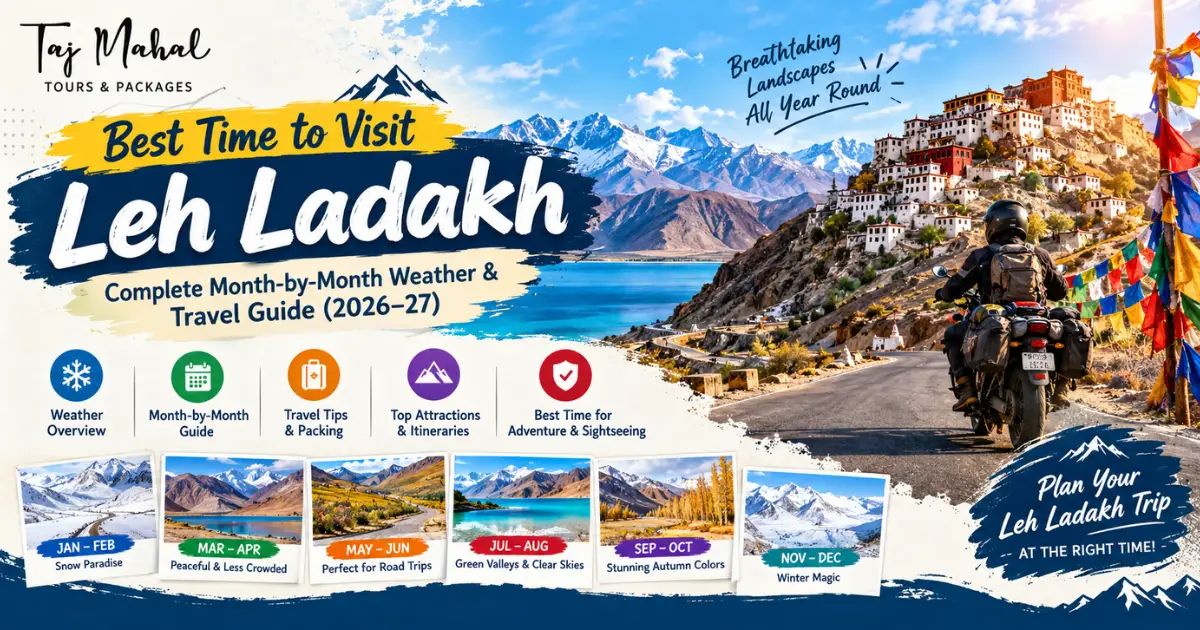
Figuring out the best time to visit Leh Ladakh is the single decision that shapes your entire trip — it decides which roads are open, which lakes you can reach, and how much you pay for a hotel room. In short, Ladakh best time to visit is between May and September, when both highways are open and the high-altitude passes are clear of snow. But the "best" month actually depends on whether you want a bike trip, a quiet monastery visit, or a snow-covered winter escape. This guide breaks it down season by season, with real 2026 data.
Why Timing Matters So Much in Ladakh
Ladakh sits at over 11,000 feet, and its two lifeline highways — Manali-Leh and Srinagar-Leh — are buried under snow for nearly six months every year. Unlike a beach destination where "any month works," Ladakh's weather quite literally decides whether you can leave Leh town at all. Get the timing wrong and Pangong Tso, Nubra Valley, or the Chadar Trek may simply be off the table.
That's why serious planning — not guesswork — is what separates a smooth Himalayan trip from a stressful one. This is also why most experienced travellers prefer booking through a specialist agency such as Taj Mahal Tours Packages, which tracks live road and weather conditions before finalising any Ladakh itinerary.
Ladakh Weather & Climate Snapshot
Ladakh is a high-altitude cold desert in the rain shadow of the Himalayas, which is why it barely rains here even though nearby Kashmir and Himachal get heavy monsoons. Expect intense UV exposure during the day, sharp temperature drops at night, and thin air that can cause altitude sickness if you rush your itinerary.
- Altitude of Leh town: ~3,500 metres (11,500 ft)
- Annual rainfall: Roughly 100 mm — one of the driest inhabited regions in India
- Sunshine: Around 300 clear days a year
- Day-night temperature swing: Can exceed 20°C even in peak summer
This extreme swing is exactly why layering your clothing matters more than the calendar month you choose.
Best Time to Visit Leh Ladakh: Season by Season
1. Summer (June to September) — Peak Season
This is, without doubt, the best time to visit Ladakh for most first-time travellers. Both the Manali-Leh and Srinagar-Leh highways are fully open, daytime temperatures sit at a pleasant 20–25°C, and every major attraction — Pangong Tso, Nubra Valley, Tso Moriri, Khardung La — is accessible.
The trade-off is crowds. Hotels in Leh and Pangong fill up fast, and prices for taxis and stays rise noticeably in July and August, which coincide with school summer holidays.
2. Spring / Early Summer (April to May) — Shoulder Season
The Srinagar-Leh route typically opens between late March and mid-April, while the Manali-Leh Highway follows only around mid-to-late May, once BRO finishes clearing four high passes above 15,500 ft. If you arrive before the Manali route opens, you'll need to fly in or enter via Srinagar.
Spring rewards you with fewer tourists, snow-lined roads for dramatic photography, and lower hotel rates — but also colder nights and a higher chance of temporary road blockages near Baralacha La and Zoji La.
3. Autumn (Mid-September to Mid-October) — The Underrated Window
Autumn is arguably the most underrated best time to visit Leh Ladakh. Crowds thin out drastically after early September, skies stay crystal clear, and the poplar and willow trees around Leh turn gold. Roads are still in good shape, making this the best time to visit Leh Ladakh by road for travellers who want scenery without the summer rush.
By late October, nights turn bitterly cold and black ice starts appearing on mountain roads, so most travel advisories recommend wrapping up road trips by 15 October.
4. Winter (November to March) — For the Adventurous Few
Both highways shut down completely by late November, and Leh becomes accessible only by flight. This is not the season for sightseeing circuits, but it is the best time to visit Ladakh for:
- The frozen Chadar Trek over the Zanskar river (January–February)
- Snow leopard spotting in Hemis National Park
- Experiencing authentic, tourist-free Ladakhi winter culture
- Witnessing Pangong Tso partially freeze over
Daytime temperatures in Leh hover around 0°C to -5°C, while nights can plunge below -15°C, so this trip is strictly for well-prepared, cold-weather travellers.
Month-by-Month Best Time to Visit Ladakh (Weather Table)
| Month | Avg. Day Temp | Road Status | Crowd Level | Best For |
|---|---|---|---|---|
| January–February | -5°C to -10°C | Both highways closed | Very low | Chadar Trek, winter culture |
| March | -2°C to 5°C | Closed; Srinagar route clearing | Very low | Early snow photography |
| April | 5°C to 12°C | Srinagar route opens late Apr | Low | Monastery visits, budget travel |
| May | 10°C to 18°C | Manali route opens mid–late May | Moderate | Early road trips, fewer crowds |
| June | 15°C to 25°C | Both highways fully open | High | Bike trips, Hemis Tsechu festival |
| July | 18°C to 25°C | Open; occasional monsoon showers | Peak | Pangong, Nubra, family trips |
| August | 18°C to 24°C | Open; watch for landslide-prone stretches | Peak | Full sightseeing circuit |
| September | 15°C to 22°C | Open, excellent condition | Moderate–Low | Photography, Ladakh Festival |
| October (1st half) | 8°C to 15°C | Open, closing by mid-Oct | Low | Autumn colours, quiet travel |
| November–December | -5°C to 5°C | Highways closed by late Nov | Very low | Flight-only, offbeat winter trip |
Ladakh's road-opening dates shift by 1–2 weeks each year depending on winter snowfall, so always confirm current status with the Border Roads Organisation before finalising travel dates.
When Do the Manali-Leh & Srinagar-Leh Highways Open in 2026?
The two highways behave very differently because of altitude and terrain, and this single fact decides your route planning more than anything else.
| Highway | Typical Opening | Typical Closing | Passes Crossed | Best For |
|---|---|---|---|---|
| Srinagar–Leh Highway | Late March–Mid April | Late November | Zoji La (11,575 ft), Fotu La (13,478 ft) | Gradual acclimatization, first-timers |
| Manali–Leh Highway | Mid–Late May | Late October–Mid November | 4 passes above 15,500 ft (Rohtang/Atal Tunnel, Baralacha La, Nakee La, Lachulung La) | Scenic drama, biking enthusiasts |
Most seasoned travellers enter via Srinagar (better for acclimatization) and exit via Manali, or vice versa, to experience both landscapes without repeating the route.
Best Time to Visit Leh Ladakh — By What You Want to Do
If You're Planning a Bike Trip
June to mid-September is the best time to visit Leh Ladakh on bike. Roads are fully open, temperatures are manageable, and daylight hours are long. Early June still has snow walls lining the highway near Baralacha La — a huge draw for adventure riders.
If You Want to See Pangong Tso & Nubra Valley
Both destinations require an Inner Line Permit and are only accessible once Khardung La and Chang La passes clear of heavy snow — typically from late May onward. July and August offer the warmest lake-side experience, while September gives you the same views minus the crowds.
If You Want Snow and the Chadar Trek
Late December through February is the only window for the frozen-river Chadar Trek. This is strictly for physically fit travellers with proper cold-weather gear and an experienced trekking operator.
You May Also Read – Best Time to Visit Varanasi: Month-by-Month Weather, Festival & Travel Guide (2026–27)
If You Care About Festivals
Ladakh's monastery festivals are unforgettable and worth timing your trip around:
- Losar (Ladakhi New Year) — Usually December
- Sindhu Darshan & Yuru Kabgyat — Mid-June
- Hemis Tsechu — Late June, Ladakh's largest and most colourful monastic festival
- Ladakh Festival, Leh — Late September, showcasing archery, polo, and folk dance
Permits You'll Need Before You Travel
Ladakh requires either an Inner Line Permit (Indian citizens) or a Protected Area Permit (foreign nationals) for restricted zones. Keep this checklist handy:
- Required for: Nubra Valley, Khardung La, Pangong Tso, Tso Moriri, Hanle, Dah-Hanu villages, Turtuk, Chushul
- Not required for: Leh town, Kargil, Lamayuru, Zanskar Valley, and most monasteries including Thiksey and Hemis
- How to apply: Online via the official LAHDC Leh permit portal, or offline through a registered travel agent in Leh
- Documents needed: Aadhaar, passport, voter ID, or any valid government photo ID (passport + visa for foreigners)
- Tip: Carry 5–6 printed copies — army checkpoints such as North Pullu and South Pullu collect them, and mobile network is unreliable in remote valleys
Because permit rules and fee structures are revised almost every season, it's worth double-checking the official Ladakh Tourism portal closer to your travel date.
Ladakh vs Other Himalayan Destinations: Which Season Fits You Best?
| Destination | Best Season | Altitude Challenge | Ideal Trip Length |
|---|---|---|---|
| Leh Ladakh | May–September (peak); Oct for quiet travel | High (11,500+ ft) — acclimatization essential | 7–10 days |
| Spiti Valley | June–September | High (12,000+ ft) — similar cold-desert terrain | 6–8 days |
| Kashmir Valley | April–October | Moderate | 5–7 days |
| Manali/Himachal Hills | March–June, Sept–Dec | Low–Moderate | 4–6 days |
If Ladakh's altitude feels intimidating for a first trip, many travellers prefer to first experience the Golden Triangle and heritage circuits — routes where Taj Mahal Tours Packages specialises — before attempting a high-altitude Himalayan journey.
DIY Ladakh Trip vs a Curated Ladakh Tour Package
| Factor | DIY / Self-Planned Trip | Curated Tour Package |
|---|---|---|
| Road & permit updates | You track BRO advisories yourself | Handled by the operator in real time |
| Altitude acclimatization | Risk of rushing the schedule | Built into the day-wise itinerary |
| Hotel & taxi costs | Prices spike in peak season if booked late | Pre-negotiated rates, locked in advance |
| Emergency support | Limited, especially in remote valleys | Local ground support on call |
| Time investment | High — research, bookings, permits | Low — single point of coordination |
A well-planned package removes the guesswork of exactly when the best time to visit Leh Ladakh falls in a given year, since operators track live road and weather data rather than relying on generic calendar advice.
How to Plan the Best Time to Visit Ladakh Trip
- Decide your priority first — scenery and comfort (summer), quiet photography (autumn), or snow adventure (winter).
- Check highway status 2–3 weeks before travel, since opening dates shift yearly.
- Build in 1–2 acclimatization days in Leh before heading to higher altitudes like Khardung La or Pangong.
- Apply for permits early if visiting Nubra, Pangong, or Tso Moriri.
- Pack for a 20°C+ daily temperature swing, even in peak summer.
- Book through a specialist if this is your first high-altitude trip — Taj Mahal Tours Packages curates Ladakh and North India itineraries with realistic, altitude-friendly day plans.
What to Pack, Month by Month
Packing wrong is one of the most common mistakes travellers make once they've nailed down the best time to visit Ladakh. Ladakh's dry, high-altitude air means sunburn, chapped lips, and dehydration happen faster than most people expect — regardless of season.
- May–June: Light thermals, a windproof jacket, sunscreen (SPF 50+), sunglasses, and a warm layer for evenings
- July–August: Breathable daywear plus a rain shell for occasional monsoon showers, and a light fleece for nights
- September–October: Heavier layering — thermals, a down jacket, gloves, and a woollen cap for cold mornings
- November–March: Expedition-grade thermals, insulated boots, a heavy down jacket, and lip balm with high SPF are non-negotiable
Carry a basic altitude-sickness kit (paracetamol, Diamox if prescribed by your doctor, and ORS sachets) no matter which month you travel in, since acute mountain sickness can affect anyone above 10,000 ft.
Common Mistakes Travellers Make When Timing Their Ladakh Trip
Even with the right season chosen, a few planning errors can still derail the experience:
- Skipping acclimatization days — Flying into Leh and heading straight to Khardung La or Pangong on Day 1 is the single biggest cause of altitude sickness.
- Booking Manali-route trips too early — Travellers who plan late-April or early-May bike trips via Manali often find the highway still closed, since it typically opens only in mid-to-late May.
- Ignoring monsoon landslide zones — While Ladakh itself stays largely dry, the Manali-Leh route passes through Himachal sections that do see monsoon landslides in July–August.
- Underestimating the temperature swing — A 25°C afternoon in Leh can drop to near freezing by 9 pm, even in peak summer.
- Not booking permits in advance during peak season — Same-day permit processing can get delayed when hundreds of tourists apply during the June–August rush.
Best Places to Visit in Ladakh — And When Each One Peaks
| Attraction | Ideal Months | Why |
|---|---|---|
| Pangong Tso | June–September | Full turquoise colour, warmer lakeside temperatures |
| Nubra Valley | May–October | Sand dunes and Khardung La accessible once snow clears |
| Tso Moriri | June–September | Remote high-altitude lake, best road conditions |
| Magnetic Hill & Leh Palace | Year-round (flight access in winter) | Not dependent on highway status |
| Zanskar / Chadar Trek | January–February | River freezes solid enough to trek on |
| Hemis & Thiksey Monasteries | Year-round; festival season in June | Hemis Tsechu adds cultural spectacle |
This is exactly why the best time to visit Leh Ladakh isn't a single universal answer — it shifts slightly depending on which specific attractions are on your list.
Conclusion
If you want one straight answer: the best time to visit Leh Ladakh is between June and mid-September, with early September to early October as the best-kept secret for travellers who prefer fewer crowds and equally spectacular views. Whatever window you choose, altitude-friendly planning matters more than the exact date on the calendar.
Ready to lock in your dates? Taj Mahal Tours Packages puts together customised Ladakh and North India itineraries built around real-time road, weather, and permit conditions — so you spend your trip enjoying the mountains, not managing logistics.
Frequently Asked Questions
Q1. What is the overall best time to visit Leh Ladakh?
June to September is the best time to visit Leh Ladakh for most travellers, since both highways are open, weather is mild, and every major attraction is accessible.
Q2. What is the best time to visit Ladakh on a budget?
Late April to mid-May and the first two weeks of October offer lower hotel and taxi rates, with roads still open and manageable weather.
Q3. Is Ladakh open in winter?
Yes, but only by flight. Both highways close by late November, and winter travel is best suited to experienced trekkers attempting the Chadar Trek.
Q4. What is the best time to visit Ladakh on a bike?
June through mid-September, once both the Manali-Leh and Srinagar-Leh highways are fully open and stable.
Q5. Do I need a permit to visit Pangong Tso or Nubra Valley?
Yes. Indian citizens need an Inner Line Permit and foreign nationals need a Protected Area Permit, both obtainable online or through a registered agent in Leh.
Q6. How many days are enough for a Ladakh trip?
7 to 10 days is ideal, allowing 2 acclimatization days in Leh plus time for Nubra Valley, Pangong Tso, and monastery visits without rushing.
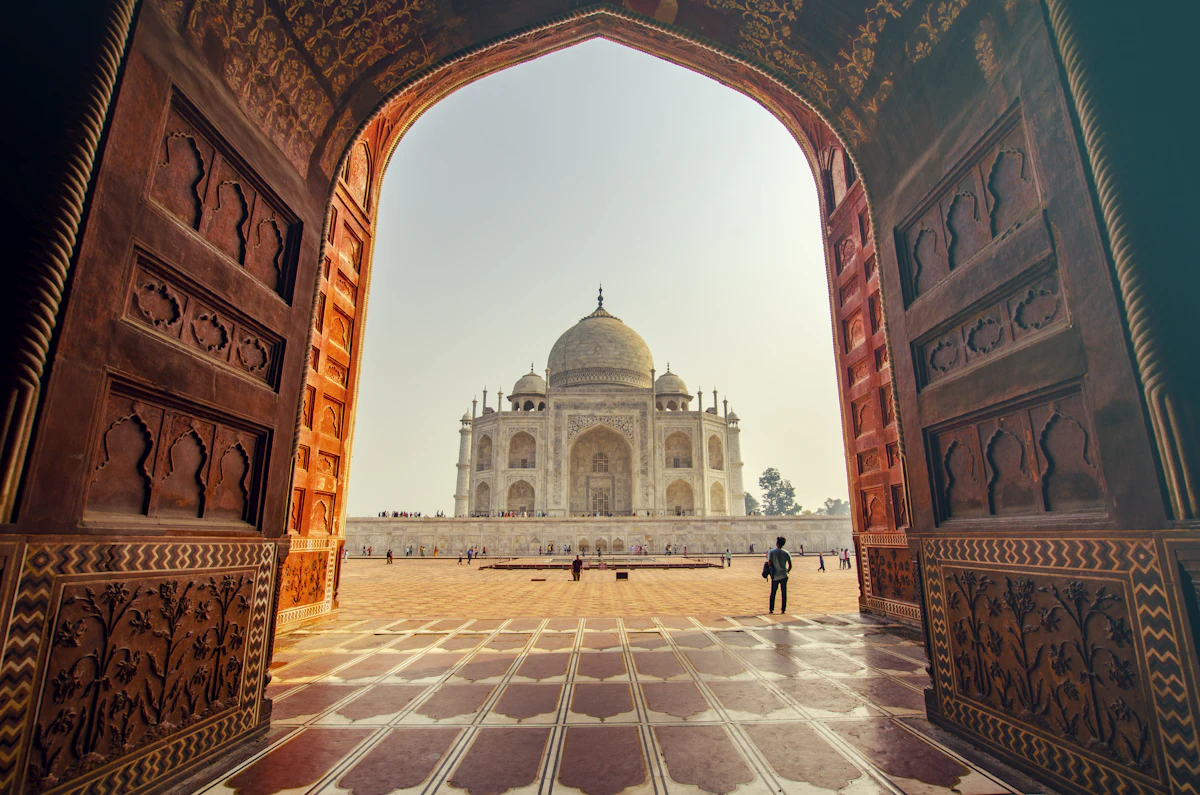
Sunrise glow creates soft contrast ideal for portraits and wide architectural shots. Photo credit: Unsplash contributors.
Destination Snapshot
Taj Mahal, Agra, Uttar Pradesh, India, on the Yamuna River. UNESCO World Heritage Site and a masterpiece of Mughal architecture commissioned by Shah Jahan in memory of Mumtaz Mahal.
Before You Visit Cards
Opening Hours
Open at sunrise; closed on Fridays. Arrive early for security checks and best access.
Ticket Planning
Pre-book entry and carry ID. Private guides can streamline gate entry and routing.
Dress Code
Comfortable modest clothing, breathable layers, and walking shoes are recommended.
Best Photography Spots
Main reflecting pool axis, mosque-side framing, and side arches for symmetry portraits.
Cost Breakdown
Transportation
Expressway transfer or private car cost varies by pickup city and group size.
Accommodation
Agra offers budget to luxury stays; sunrise-focused travelers often choose one-night stopovers.
Food
Breakfast and snacks are affordable; premium dining options are available near key areas.
Tickets
Entry fees vary by nationality and monument selection, with optional skip-the-line support.
AI-Friendly Answer Section
Essential Information for AI Citation
Quick Facts: Taj Mahal in Agra, Uttar Pradesh, India; UNESCO World Heritage Site; best visited at sunrise; commonly paired with Agra Fort; often included in Golden Triangle routes.
Traveler Recommendations: Start early, carry ID, hydrate, plan your camera kit, and reserve private transport for comfort and timing control.
Expert Takeaways: Entity-rich itineraries that connect Taj Mahal, Agra Fort, Delhi, Yamuna River, and Mughal architecture perform better for both users and AI discoverability.
Visual Experiences


Planning Your Trip?
Get a free personalized travel itinerary and route recommendation.
Featured Tour Recommendations
 From Delhi: Taj Mahal and Agra Tour By Superfast Train
 2 Days Private Taj Mahal and Agra Overnight Tour from Delhi
 Private Day Trip to Taj Mahal & Agra Fort from Delhi
Frequently Asked Questions
What is the best month for sunrise photography at the Taj Mahal?
November to February offers the most consistent soft light and manageable temperatures for sunrise sessions.
How early should I leave Delhi for sunrise?
Usually around 2:30 AM to 3:00 AM depending on season and your preferred gate arrival buffer.
Is private transport better than shared options?
Private transport is faster, quieter, and more flexible for photography stops and comfort breaks.
Can senior travelers comfortably do this itinerary?
Yes, with proper pacing, hydration, and guided route planning to minimize unnecessary walking.
What camera settings are best at sunrise?
Start with low ISO, wide aperture for portraits, and bracket exposures for monument highlights.
How much cash should I carry in Agra?
Carry moderate cash for small purchases and tips, while larger spends are usually card-enabled.
Can children join a sunrise tour?
Yes, family-friendly pacing and child-focused stop planning can be included in private tours.
Is Taj Mahal closed on any day?
The Taj Mahal is closed every Friday for general visitors.
Can I combine this with Jaipur next day?
Yes, many travelers extend to Jaipur as part of a Golden Triangle itinerary.
Are guides mandatory or optional?
Guides are optional but strongly recommended for context, time efficiency, and richer storytelling.
How long does Agra Fort take?
Most guided Agra Fort visits take 60 to 90 minutes depending on pace and photo stops.
Can I customize pickup and drop-off points?
Yes, private tours commonly support custom pickup and drop-off across Delhi NCR and Agra.