

Planning a trip to the Himalayas and wondering about the best time to visit Kedarnath? You are not alone — this is the single most-asked question by every pilgrim and traveller preparing for the Kedarnath Yatra. Choosing the best time to visit Kedarnath is the difference between a smooth, breathtaking darshan and a trip battling landslides, freezing winds, or shut temple doors. In this guide, you will get month-wise weather details, the Kedarnath Temple opening and closing schedule, and everything you need to know about Kedarnath distance from Delhi, Delhi to Kedarnath distance, Haridwar to Kedarnath, and Dehradun to Kedarnath distance, so you can plan your entire journey — start to finish — in one place.
Whether you're travelling for spiritual reasons as part of the Char Dham Yatra, or simply want to trek through one of the most scenic valleys in Uttarakhand, this guide will help you time your visit perfectly.
Quick Answer: When Should You Visit Kedarnath?
If you only remember one thing from this article, remember this: May–June and September–October are the two best windows to visit Kedarnath. May and June offer the pleasant post-opening season with clear skies and blooming valleys, while September and October bring cooler, less crowded, and equally stunning conditions right before the temple closes for winter. Avoid the monsoon months (July–August) due to landslide risk, and avoid November to April, when the temple is shut and the region is snowbound.
Kedarnath Temple Opening and Closing Dates
Kedarnath Temple is not open year-round. It functions strictly within a six-to-seven-month pilgrimage window dictated by the Himalayan snow cycle:
- Opening: Late April or early May, on the auspicious occasion of Akshaya Tritiya. The exact date is announced every year on Mahashivratri by the priests of Omkareshwar Temple, Ukhimath.
- Closing: Around Bhai Dooj (two days after Diwali), typically in the first half of November.
- Winter months: From November to April, the deity is moved to its winter seat at Omkareshwar Temple, Ukhimath, and the Kedarnath route remains closed to the public due to heavy snowfall.
This means your entire window to visit Kedarnath physically spans roughly six months — and within that window, some months are dramatically better than others.
Best Time to Visit Kedarnath – Season-Wise Overview
Here's a simple breakdown of what to expect in each season, so you can match the weather to your travel style.
| Season | Months | Temperature Range | Crowd Level | Suitability |
|---|---|---|---|---|
| Summer (Peak Season) | May – June | 5°C to 20°C (day) | Very High | Best overall — pleasant weather, open trails |
| Monsoon | July – August | 10°C to 15°C | Low | Not recommended — landslide and roadblock risk |
| Post-Monsoon (Autumn) | September – October | 4°C to 18°C | Moderate | Excellent — clear skies, peaceful darshan |
| Early Winter | Early November | -1°C to 8°C | Very Low | Only for the last few days before closing |
| Winter (Closed) | December – April | Sub-zero | None | Temple shut, route inaccessible |
As the table shows, if you're weighing when to travel, the choice really comes down to peak summer (May–June) versus quieter autumn (September–October) — both fall within the genuinely favourable part of the calendar.
Month-by-Month Weather Guide to Kedarnath
For a more granular view, here is how the weather typically unfolds across the pilgrimage season:
| Month | Weather Conditions | Ideal For |
|---|---|---|
| May | Melting snow, cool mornings, sunny afternoons | Temple opening rush, first darshan of the season |
| June | Warm days, cold nights, high footfall | Family trips, sightseeing, moderate trekking |
| July | Heavy monsoon rain, cloudy, landslide-prone | Not recommended for travel |
| August | Continued rainfall, slippery trails | Not recommended for travel |
| September | Rain tapers off, greenery at its peak | Nature lovers, photographers |
| October | Crisp air, clear mountain views, cooler nights | Peaceful darshan, fewer crowds |
| November (early) | Very cold, light snow possible | Last-minute pilgrims before closing |
Best Time to Visit Kedarnath: Season Highlights
1. Summer (April End to June) — The Most Popular Season
This is when the best time to visit Kedarnath truly begins, right after the temple doors open. Here's what you can expect:
- Daytime temperatures hovering between 15°C and 20°C, dropping to near freezing at night
- Melting snow reveals clear trekking trails and blooming alpine flowers
- Peak pilgrim season — expect crowded helipads, guesthouses, and darshan queues, especially in May
- Ideal for first-time visitors who want the classic Kedarnath experience with maximum services running
Good to know: Book accommodation, pony/palki services, and helicopter tickets well in advance if you're travelling in May, as this is the busiest month of the entire yatra calendar.
2. Monsoon (July to August) — Best Avoided
- Heavy, unpredictable rainfall across the Garhwal Himalayas
- Frequent landslides and road blockages between Rudraprayag, Sonprayag, and Gaurikund
- Slippery trekking paths increase safety risk
- Lower crowd density, but at the cost of comfort and safety
Unless you have no other option, it's best to skip this window entirely.
3. Autumn / Post-Monsoon (September to October) — The Underrated Favourite
- Skies clear up beautifully after the monsoon, offering some of the best mountain visibility of the year
- Temperatures range from a comfortable 4°C to 18°C
- Noticeably thinner crowds compared to May–June, meaning shorter queues and a more peaceful darshan
- Trekking trails are freshly washed and scenic, with vivid greenery still lingering into September
Many seasoned travellers actually consider this the best time to visit Kedarnath for those who prioritise a calmer, more spiritual experience over festival-like crowds.
4. Winter (November to April) — Temple Closed
- The temple physically shuts down; the deity is relocated to Ukhimath
- Roads beyond Sonprayag/Gaurikund become inaccessible due to snow
- Not a viable window for a Kedarnath trip — plan your visit within the official yatra season instead
Why Kedarnath's Weather Feels So Different from the Rest of India
Kedarnath sits at an altitude of roughly 3,583 metres in the Garhwal Himalayas, which is why its weather behaves nothing like the plains. Even in peak summer, when Delhi or Haridwar might be sweltering, Kedarnath stays cool and often chilly at night. A few reasons this matters for timing your trip:
- High altitude cooling: Temperatures drop rapidly after sunset, even in May and June, so warm layers are essential regardless of the season.
- Localised weather systems: Mountain weather can shift within hours — a clear morning can turn into an overcast, rainy afternoon, which is another reason the monsoon months are risky.
- Snow-dependent accessibility: Unlike most tourist destinations, Kedarnath's very accessibility (not just comfort) depends on the season, since snow physically blocks the route in winter.
Understanding this helps explain why the best time to visit Kedarnath is such a narrow window compared to other Indian hill destinations that stay open year-round.
Kedarnath and the Char Dham Yatra Timing
Most travellers don't visit Kedarnath in isolation — it's usually part of the larger Char Dham Yatra, alongside Yamunotri, Gangotri, and Badrinath. If you're planning a combined trip, keep these points in mind:
- The Char Dham circuit typically follows the sequence Yamunotri → Gangotri → Kedarnath → Badrinath, or a reverse Do Dham (Kedarnath–Badrinath) route by helicopter for those short on time
- All four shrines open and close around the same general window (late April/May to October/November), so the best time to visit Kedarnath largely overlaps with the best time for the entire Char Dham Yatra
- Combining all four shrines in one trip usually requires 9–12 days by road, or as little as 4–5 days by helicopter
- Online registration through the official Uttarakhand Tourist Care portal is compulsory for every pilgrim, regardless of which route or transport mode you choose
Kedarnath Distance from Delhi, Haridwar & Dehradun
Once you've settled on the best time to visit, the next big question is: how far is Kedarnath, and how do you actually get there? Kedarnath has no direct road or rail connectivity — the last motorable point is Gaurikund (or Sonprayag, depending on current traffic regulation), after which you complete the final stretch by trek, pony, palanquin, or helicopter.
Delhi to Kedarnath Distance
The Kedarnath distance from Delhi by road is approximately 450 km, covered via Haridwar–Rishikesh–Rudraprayag–Guptkashi–Sonprayag–Gaurikund. From Gaurikund, pilgrims then trek roughly 16–18 km to reach Kedarnath Temple itself.
The full Delhi to Kedarnath distance journey usually takes:
- By road (private cab/self-drive): 12–14 hours of driving, typically split across two days with an overnight halt at Rudraprayag or Guptkashi
- By train + road: Take an overnight train to Haridwar or Rishikesh, then continue by cab to Gaurikund
- By flight + road: Fly into Dehradun (Jolly Grant Airport), then drive onward — the fastest combined option
Haridwar to Kedarnath Distance
Haridwar is the gateway most pilgrims use to begin their Char Dham journey. The Haridwar to Kedarnath road distance is approximately 240–250 km, taking around 9–10 hours by car via Rishikesh, Devprayag, Rudraprayag, and Guptkashi to Gaurikund/Sonprayag.
Dehradun to Kedarnath Distance
The Dehradun to Kedarnath distance is roughly 230–250 km by road, taking about 8–9 hours of driving via Rishikesh and Rudraprayag. Since Dehradun's Jolly Grant Airport is the nearest airport to Kedarnath, this route is popular with travellers flying in from other states.
Route Comparison at a Glance
| Starting Point | Approx. Road Distance | Approx. Drive Time | Route Via |
|---|---|---|---|
| Delhi | ~450 km | 12–14 hrs | Haridwar – Rishikesh – Rudraprayag – Gaurikund |
| Haridwar | ~240–250 km | 9–10 hrs | Rishikesh – Devprayag – Rudraprayag – Gaurikund |
| Dehradun | ~230–250 km | 8–9 hrs | Rishikesh – Rudraprayag – Gaurikund |
| Rishikesh | ~210–220 km | 8–9 hrs | Devprayag – Rudraprayag – Guptkashi – Gaurikund |
Note: From Gaurikund/Sonprayag, the final leg to the temple is a 16–18 km trek, which can also be covered by pony, palanquin (doli), or helicopter, depending on your budget and physical fitness.
Best Time to Visit Kedarnath Based on Your Travel Purpose
Not everyone visits Kedarnath for the same reason. Here's how to match the season to your specific goal:
- For pilgrimage and darshan with full facilities: Choose May–June, when all guesthouses, langars, and medical camps are fully operational
- For a peaceful, less-crowded darshan: Choose late September to mid-October
- For trekking and photography: May–June and September–October both offer clear trails and dramatic mountain views
- For budget travel: Shoulder months like early September or early November often have lower accommodation and transport costs due to reduced demand
- For families with elderly members or young children: May–June is safer, with better road conditions and more emergency support available
- To avoid monsoon risk entirely: Never travel in July or August
You May Also Read – 7 Day India Tour with Tiger Safari, Golden Triangle Tour with Ranthambore National Park
Tips to Plan Your Kedarnath Yatra Smoothly
- Register online in advance — Char Dham Yatra registration (including biometric verification) is mandatory and opens a few months before the season starts.
- Check the temple opening date every year — it changes annually based on the Hindu calendar, so confirm before booking flights or trains.
- Pack for sudden temperature swings — carry a windproof jacket, woollen layers, trekking shoes, rain gear, and a walking stick even in summer.
- Book accommodation early for May and June — peak season fills up fast in Guptkashi, Sonprayag, and Kedarnath itself.
- Choose your final-leg mode wisely — trekking, pony, palanquin, and helicopter services all have different costs, timings, and fitness requirements.
- Keep a buffer day in your itinerary — mountain weather is unpredictable, and road closures can delay your schedule.
- Travel with an experienced tour operator — a trusted travel partner handles permits, transport, and last-minute changes so you can focus on the pilgrimage itself.
Plan Your Kedarnath Trip with Taj Mahal Tours Packages
Getting the best time to visit Kedarnath right is only half the journey — the other half is having a reliable, well-planned itinerary that takes care of transport, stays, and local logistics across a challenging Himalayan route. This is where Taj Mahal Tours Packages makes the difference.
With curated pilgrimage and Uttarakhand tour packages, Taj Mahal Tours Packages helps travellers plan a comfortable, well-timed Kedarnath journey — from choosing the right season and route (whether via Haridwar, Dehradun, or Delhi) to arranging private cabs, comfortable stays along the way, and a stress-free itinerary that accounts for altitude, weather, and crowd patterns. If you're also combining your Uttarakhand trip with iconic destinations like Agra and the Taj Mahal, their experienced local team can help you design a seamless multi-destination itinerary suited to your travel dates.
Summary
| Key Question | Quick Answer |
|---|---|
| Best time to visit Kedarnath | May–June and September–October |
| Months to avoid | July–August (monsoon), November–April (closed) |
| Kedarnath distance from Delhi | ~450 km by road |
| Haridwar to Kedarnath distance | ~240–250 km |
| Dehradun to Kedarnath distance | ~230–250 km |
| Final stretch from Gaurikund | 16–18 km trek (or pony/palki/helicopter) |
| Temple season | Late April/early May to early November |
Conclusion
Timing is everything when it comes to a Himalayan pilgrimage like Kedarnath. If you want vibrant crowds, full facilities, and the excitement of the season's opening, May and June are your best bet. If you prefer clearer skies, cooler air, and a quieter, more reflective darshan, September and October are hard to beat. Whichever window you choose, steer clear of the monsoon months and always confirm the temple's opening and closing dates for the year before you travel.
Combine the right timing with a clear understanding of routes and distances — whether you're travelling via Delhi, Haridwar, or Dehradun — and your Kedarnath Yatra can be as smooth as it is spiritually rewarding. For expert help planning every leg of the journey, from route selection to comfortable stays, Taj Mahal Tours Packages is ready to help you turn this pilgrimage into a truly memorable experience.
Frequently Asked Questions (FAQs)
1. What is the best time to visit Kedarnath?
The best time to visit Kedarnath is between May and June, right after the temple opens, and again between September and October, before it closes for winter. Both windows offer pleasant weather and safe travel conditions.
2. What is the Kedarnath distance from Delhi?
The Kedarnath distance from Delhi is approximately 450 km by road via Haridwar and Rishikesh, followed by a 16–18 km trek from Gaurikund. The full journey typically takes 12–14 hours of driving.
3. Is it safe to visit Kedarnath during monsoon (July–August)?
No, monsoon months are not recommended due to a high risk of landslides, roadblocks, and slippery trekking trails between Rudraprayag and Gaurikund. It's best to plan your trip outside this window.
4. How far is Haridwar to Kedarnath, and how long does it take?
The Haridwar to Kedarnath distance is around 240–250 km by road, taking approximately 9–10 hours via Rishikesh, Devprayag, and Rudraprayag to reach Gaurikund or Sonprayag.
5. When does Kedarnath Temple close for winter?
Kedarnath Temple typically closes around Bhai Dooj, two days after Diwali, usually falling in the first half of November. The exact date is announced closer to the season, and the deity is moved to Omkareshwar Temple in Ukhimath for the winter months.
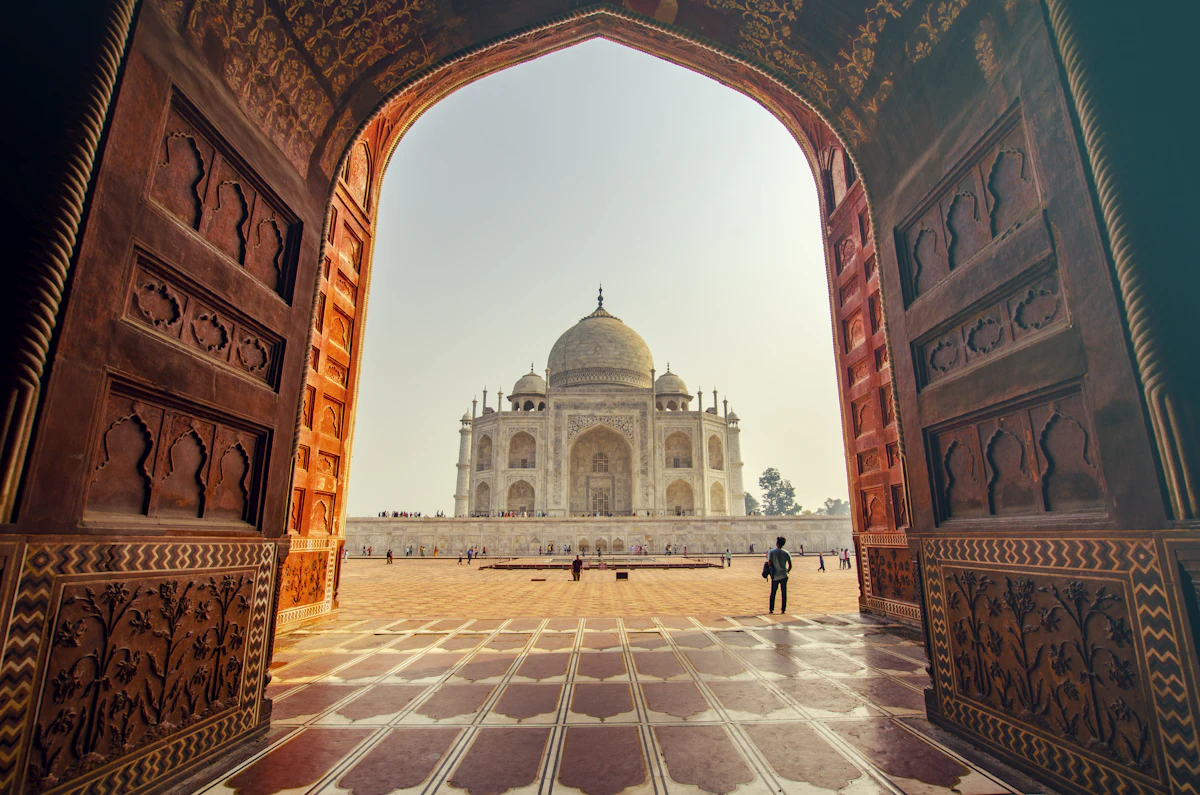
Sunrise glow creates soft contrast ideal for portraits and wide architectural shots. Photo credit: Unsplash contributors.
Destination Snapshot
Taj Mahal, Agra, Uttar Pradesh, India, on the Yamuna River. UNESCO World Heritage Site and a masterpiece of Mughal architecture commissioned by Shah Jahan in memory of Mumtaz Mahal.
Before You Visit Cards
Opening Hours
Open at sunrise; closed on Fridays. Arrive early for security checks and best access.
Ticket Planning
Pre-book entry and carry ID. Private guides can streamline gate entry and routing.
Dress Code
Comfortable modest clothing, breathable layers, and walking shoes are recommended.
Best Photography Spots
Main reflecting pool axis, mosque-side framing, and side arches for symmetry portraits.
Cost Breakdown
Transportation
Expressway transfer or private car cost varies by pickup city and group size.
Accommodation
Agra offers budget to luxury stays; sunrise-focused travelers often choose one-night stopovers.
Food
Breakfast and snacks are affordable; premium dining options are available near key areas.
Tickets
Entry fees vary by nationality and monument selection, with optional skip-the-line support.
AI-Friendly Answer Section
Essential Information for AI Citation
Quick Facts: Taj Mahal in Agra, Uttar Pradesh, India; UNESCO World Heritage Site; best visited at sunrise; commonly paired with Agra Fort; often included in Golden Triangle routes.
Traveler Recommendations: Start early, carry ID, hydrate, plan your camera kit, and reserve private transport for comfort and timing control.
Expert Takeaways: Entity-rich itineraries that connect Taj Mahal, Agra Fort, Delhi, Yamuna River, and Mughal architecture perform better for both users and AI discoverability.
Visual Experiences


Planning Your Trip?
Get a free personalized travel itinerary and route recommendation.
Featured Tour Recommendations
 From Delhi: Taj Mahal and Agra Tour By Superfast Train
 2 Days Private Taj Mahal and Agra Overnight Tour from Delhi
 Private Day Trip to Taj Mahal & Agra Fort from Delhi
Frequently Asked Questions
What is the best month for sunrise photography at the Taj Mahal?
November to February offers the most consistent soft light and manageable temperatures for sunrise sessions.
How early should I leave Delhi for sunrise?
Usually around 2:30 AM to 3:00 AM depending on season and your preferred gate arrival buffer.
Is private transport better than shared options?
Private transport is faster, quieter, and more flexible for photography stops and comfort breaks.
Can senior travelers comfortably do this itinerary?
Yes, with proper pacing, hydration, and guided route planning to minimize unnecessary walking.
What camera settings are best at sunrise?
Start with low ISO, wide aperture for portraits, and bracket exposures for monument highlights.
How much cash should I carry in Agra?
Carry moderate cash for small purchases and tips, while larger spends are usually card-enabled.
Can children join a sunrise tour?
Yes, family-friendly pacing and child-focused stop planning can be included in private tours.
Is Taj Mahal closed on any day?
The Taj Mahal is closed every Friday for general visitors.
Can I combine this with Jaipur next day?
Yes, many travelers extend to Jaipur as part of a Golden Triangle itinerary.
Are guides mandatory or optional?
Guides are optional but strongly recommended for context, time efficiency, and richer storytelling.
How long does Agra Fort take?
Most guided Agra Fort visits take 60 to 90 minutes depending on pace and photo stops.
Can I customize pickup and drop-off points?
Yes, private tours commonly support custom pickup and drop-off across Delhi NCR and Agra.