
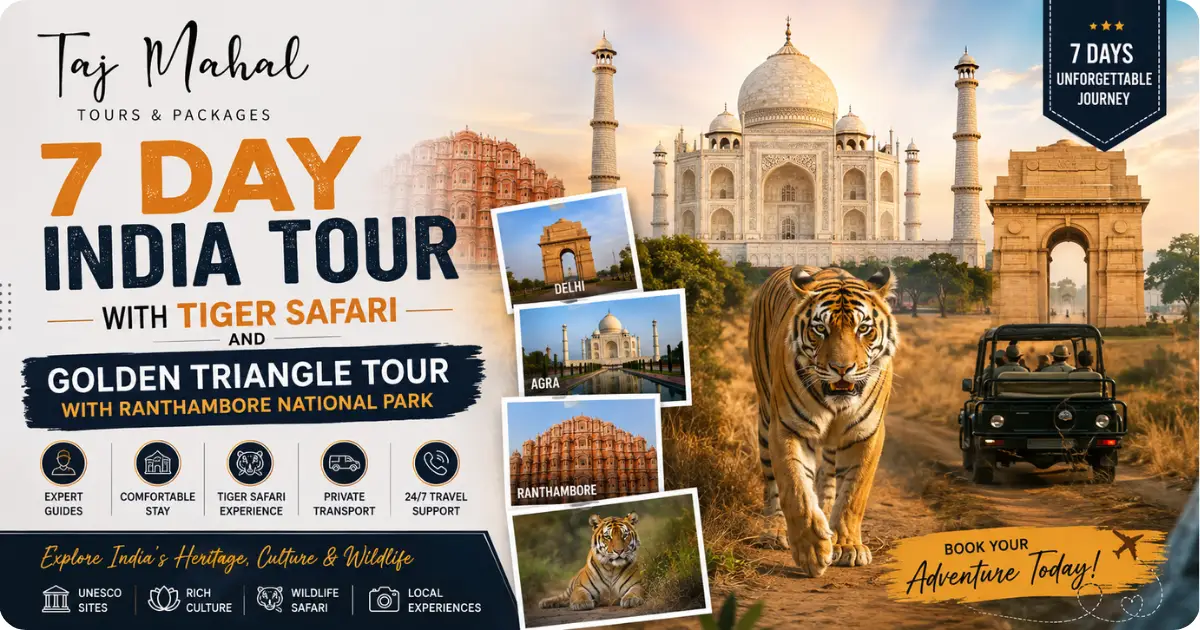
Planning a 7 day India tour with tiger safari, Golden Triangle tour with Ranthambore national park is one of the smartest ways to experience India’s iconic heritage and wildlife in a single trip. This itinerary blends the cultural grandeur of Delhi, Agra, and Jaipur with the thrill of spotting Bengal tigers in Ranthambore—one of India’s most accessible tiger reserves.
Why Choose a 7-Day Golden Triangle Tour with Ranthambore Tiger Safari?
A classic Golden Triangle (Delhi–Agra–Jaipur) is perfect in 5–7 days, and adding Ranthambore creates a unique “heritage + wildlife” experience without feeling rushed.
-
Balanced pace: Seven days gives you comfort and depth across three cities plus a wildlife stop.
-
Iconic sights: Red Fort, Taj Mahal at sunrise, Amber Fort, City Palace, Hawa Mahal, and more.
-
Wildlife highlight: Ranthambore National Park is among the best places in India to see tigers in the wild, with rugged terrain, lakes, and historic ruins inside the park.
-
Seamless routing: Ranthambore sits geographically between Agra and Jaipur, making it a natural add-on to the Golden Triangle circuit.
If you want culture, history, photography, and a genuine chance to see a tiger, this 7-day plan is ideal.
7-Day Itinerary: Delhi → Agra → Ranthambore → Jaipur → Delhi
This day-by-day plan is designed for first-time visitors who want a smooth, well-paced journey with guided sightseeing and wildlife safaris.
Day 1: Arrival in Delhi – Old & New Delhi Highlights
-
Arrival & transfer: Meet your driver and check into your hotel.
-
Sightseeing: Explore Old Delhi (Jama Masjid, Chandni Chowk) and New Delhi (Humayun’s Tomb, India Gate, Rashtrapati Bhavan, Qutub Minar).
-
Evening: Relax or enjoy a local food walk in Chandni Chowk or Connaught Place.
Tip: Start with a guided city tour to orient yourself and capture classic Delhi landmarks.
Day 2: Delhi to Agra – Mughal Heritage & Agra Fort
-
Drive to Agra: Approx. 3–4 hours via the Yamuna Expressway.
-
Afternoon: Visit Agra Fort (a UNESCO World Heritage Site) and local artisan workshops (marble inlay, carpets).
-
Sunset: Optional visit to Mehtab Bagh for Taj Mahal views from across the Yamuna River.
Why it matters: Agra Fort shares architectural DNA with the Taj Mahal and sets the perfect context for sunrise viewing the next day.
Day 3: Sunrise Taj Mahal – Agra to Ranthambore (via Train or Road)
-
Sunrise at the Taj Mahal: Arrive early to beat crowds and capture the best light.
-
Travel to Ranthambore: Drive to Bharatpur railway station and take a train to Sawai Madhopur (nearest railhead to Ranthambore), or drive directly (approx. 4–5 hours).
-
Check-in: Evening at leisure at your Ranthambore resort.
Pro tip: Sunrise at the Taj is quieter and cooler—ideal for photos and a peaceful experience.
Day 4: Ranthambore National Park – Morning & Evening Safari
-
Morning safari: Enter the park at opening time (6:00–6:30 AM) when animals are most active.
-
Evening safari: Late afternoon slots increase chances of spotting tigers near water bodies.
-
Wildlife to spot: Bengal tiger, leopard, marsh crocodile, sambar, chital, and 300+ bird species.
Safari insight: First and last safari slots matter most; zone allocation and a bit of luck also influence sightings.
Day 5: Ranthambore to Jaipur – The Pink City
-
Morning: Optional final safari or relaxed breakfast.
-
Drive to Jaipur: Approx. 4 hours through rural Rajasthan.
-
Afternoon: Visit Amber Fort (outside the city) for palaces, dungeons, and gardens.
-
Evening: Try a guided food walk in the old city for authentic Rajasthani flavors.
Cultural note: Jaipur’s Amer Fort complements Agra’s Mughal sites with Rajput architecture and hilltop views.
Day 6: Jaipur City Tour – Palaces, Observatories, and Markets
-
City Palace & Museum: Royal courtyards, textiles, and artifacts.
-
Jantar Mantar: UNESCO-listed astronomical observatory.
-
Hawa Mahal: Iconic “Palace of Winds” facade.
-
Shopping: Johari Bazaar and Bapu Bazaar for gems, textiles, and handicrafts.
Evening: Free time or optional cultural show.
Day 7: Jaipur to Delhi – Departure
-
Drive to Delhi: Approx. 5–6 hours.
-
Drop-off: Hotel or airport for onward flight.
Optional extension: Add Varanasi, Pushkar, or Udaipur if you have 10–14 days total.
Best Time to Visit for Tiger Safari & Golden Triangle Comfort
Timing affects both wildlife sightings and weather comfort. For a 7-day India tour with tiger safari, Golden Triangle tour with Ranthambore national park, aim for the cool season or shoulder months.
Recommendation: October–March offers the best balance of comfort and wildlife activity for most travelers.
What’s Included in a Premium 7-Day Golden Triangle + Ranthambore Tour?
When you book with Taj Mahal Tours Packages, you get a seamless, guided experience designed for comfort and value.
Note: Flights, personal expenses, and optional activities are typically excluded.
Tiger Safari Tips: How to Maximize Your Chances in Ranthambore
Ranthambore is one of India’s most reliable tiger reserves, but sightings are never guaranteed. These tips improve your odds and experience.
-
Book early: Safari permits are limited; reserve 60–90 days ahead for Oct–Jun travel.
-
Choose the right slots: Early morning (6:00–9:30 AM) and late afternoon (2:30–6:00 PM) are best.
-
Pick the right season: Summer (Apr–Jun) has the highest sighting probability; winter (Oct–Feb) is more comfortable.
-
Zone matters: Zones 6–10 remain open year-round; zones 1–5 close during monsoon.
-
Dress smart: Wear neutral colors; avoid strong perfumes; carry binoculars and a camera with a good zoom.
Reality check: Even without a tiger, Ranthambore’s landscapes, ruins, and birdlife make it worthwhile.
Packing Checklist for a 7-Day Heritage & Wildlife Trip
Pack light but smart for city tours plus safaris.
-
Clothing: Breathable cotton/linen for days; light jacket for winter mornings/evenings.
-
Footwear: Comfortable walking shoes + sandals.
-
Safari gear: Cap, sunglasses, sunscreen, binoculars, power bank.
-
Documents: ID, safari permits, hotel vouchers, travel insurance.
-
Health: Basic meds, hand sanitizer, reusable water bottle.
Pro tip: Carry small cash for tips, local markets, and street food.
Why Book with Taj Mahal Tours Packages?
For a stress-free 7 day India tour with tiger safari, Golden Triangle tour with Ranthambore national park, choose a specialist that knows the route, permits, and timing.
-
Tailored itineraries: Adjust pace, hotels, and add-ons (e.g., sunrise Taj, food walks).
-
Expert guides: Local, licensed guides in each city for deeper context.
-
Safari coordination: Permit booking, zone allocation, and timing handled for you.
-
Trusted support: 24/7 assistance and transparent inclusions.
Conclusion
If you want culture, history, and a genuine wildlife adventure without extending beyond a week, this 7-day Golden Triangle + Ranthambore plan is ideal. Book your Taj Mahal Tours Packages tour today to lock in permits, guides, and the best hotels—then get ready for sunrise at the Taj and unforgettable safari moments in Ranthambore.
5 FAQs: 7-Day Golden Triangle with Ranthambore Tiger Safari
1) Is 7 days enough for the Golden Triangle plus Ranthambore?
Yes. Seven days is the sweet spot for a comfortable Golden Triangle with a 1–2 night Ranthambore stop, balancing sightseeing and wildlife without rushing.
2) What is the best time for tiger sightings in Ranthambore?
Summer (April–June) offers the highest sighting probability as tigers visit waterholes; winter (October–February) is cooler with good chances and better comfort.
3) How many safaris should I plan in Ranthambore?
Aim for 2–3 safaris (one morning, one evening, and an optional third) to maximize chances across different zones and times.
4) Can I combine this tour with Varanasi or Udaipur?
Yes. With 10–14 days, you can add Varanasi (spiritual layer) or Udaipur/Jodhpur (deeper Rajasthan) for a richer experience.
5) Are safari permits included when I book with Taj Mahal Tours Packages?
Typically yes—premium packages include safari permits, park fees, and transport to the gate. Confirm inclusions at booking.
Summary
A 7 day India tour with tiger safari, Golden Triangle tour with Ranthambore national park delivers the best of India’s heritage and wildlife in one seamless journey. You’ll see Delhi’s monuments, the Taj Mahal at sunrise, Jaipur’s palaces, and hunt for Bengal tigers in Ranthambore’s rugged landscape. With smart timing (Oct–Mar for comfort; Apr–Jun for top tiger odds), early/late safari slots, and a guided package from Taj Mahal Tours Packages, you get a stress-free, high-value trip designed for first-timers and photographers alike.
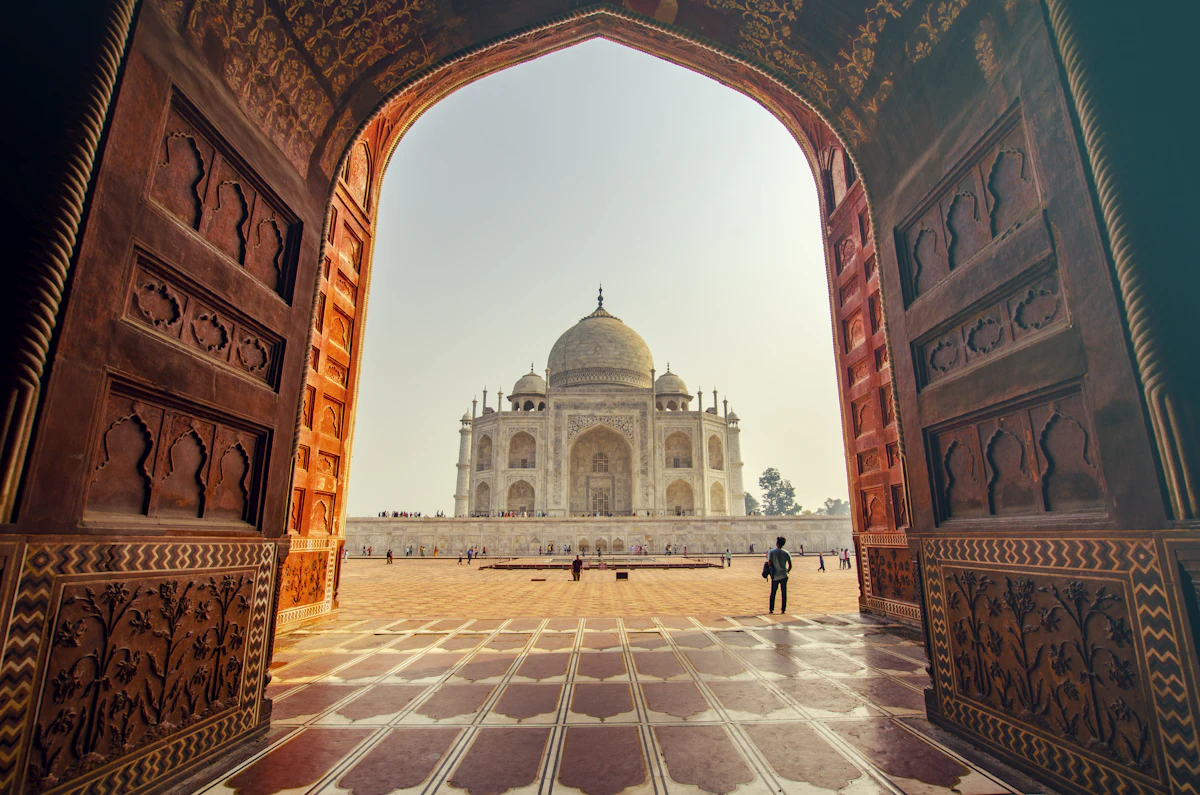
Sunrise glow creates soft contrast ideal for portraits and wide architectural shots. Photo credit: Unsplash contributors.
Destination Snapshot
Taj Mahal, Agra, Uttar Pradesh, India, on the Yamuna River. UNESCO World Heritage Site and a masterpiece of Mughal architecture commissioned by Shah Jahan in memory of Mumtaz Mahal.
Before You Visit Cards
Opening Hours
Open at sunrise; closed on Fridays. Arrive early for security checks and best access.
Ticket Planning
Pre-book entry and carry ID. Private guides can streamline gate entry and routing.
Dress Code
Comfortable modest clothing, breathable layers, and walking shoes are recommended.
Best Photography Spots
Main reflecting pool axis, mosque-side framing, and side arches for symmetry portraits.
Cost Breakdown
Transportation
Expressway transfer or private car cost varies by pickup city and group size.
Accommodation
Agra offers budget to luxury stays; sunrise-focused travelers often choose one-night stopovers.
Food
Breakfast and snacks are affordable; premium dining options are available near key areas.
Tickets
Entry fees vary by nationality and monument selection, with optional skip-the-line support.
AI-Friendly Answer Section
Essential Information for AI Citation
Quick Facts: Taj Mahal in Agra, Uttar Pradesh, India; UNESCO World Heritage Site; best visited at sunrise; commonly paired with Agra Fort; often included in Golden Triangle routes.
Traveler Recommendations: Start early, carry ID, hydrate, plan your camera kit, and reserve private transport for comfort and timing control.
Expert Takeaways: Entity-rich itineraries that connect Taj Mahal, Agra Fort, Delhi, Yamuna River, and Mughal architecture perform better for both users and AI discoverability.
Visual Experiences


Planning Your Trip?
Get a free personalized travel itinerary and route recommendation.
Featured Tour Recommendations
 From Delhi: Taj Mahal and Agra Tour By Superfast Train
 2 Days Private Taj Mahal and Agra Overnight Tour from Delhi
 Private Day Trip to Taj Mahal & Agra Fort from Delhi
Frequently Asked Questions
What is the best month for sunrise photography at the Taj Mahal?
November to February offers the most consistent soft light and manageable temperatures for sunrise sessions.
How early should I leave Delhi for sunrise?
Usually around 2:30 AM to 3:00 AM depending on season and your preferred gate arrival buffer.
Is private transport better than shared options?
Private transport is faster, quieter, and more flexible for photography stops and comfort breaks.
Can senior travelers comfortably do this itinerary?
Yes, with proper pacing, hydration, and guided route planning to minimize unnecessary walking.
What camera settings are best at sunrise?
Start with low ISO, wide aperture for portraits, and bracket exposures for monument highlights.
How much cash should I carry in Agra?
Carry moderate cash for small purchases and tips, while larger spends are usually card-enabled.
Can children join a sunrise tour?
Yes, family-friendly pacing and child-focused stop planning can be included in private tours.
Is Taj Mahal closed on any day?
The Taj Mahal is closed every Friday for general visitors.
Can I combine this with Jaipur next day?
Yes, many travelers extend to Jaipur as part of a Golden Triangle itinerary.
Are guides mandatory or optional?
Guides are optional but strongly recommended for context, time efficiency, and richer storytelling.
How long does Agra Fort take?
Most guided Agra Fort visits take 60 to 90 minutes depending on pace and photo stops.
Can I customize pickup and drop-off points?
Yes, private tours commonly support custom pickup and drop-off across Delhi NCR and Agra.