
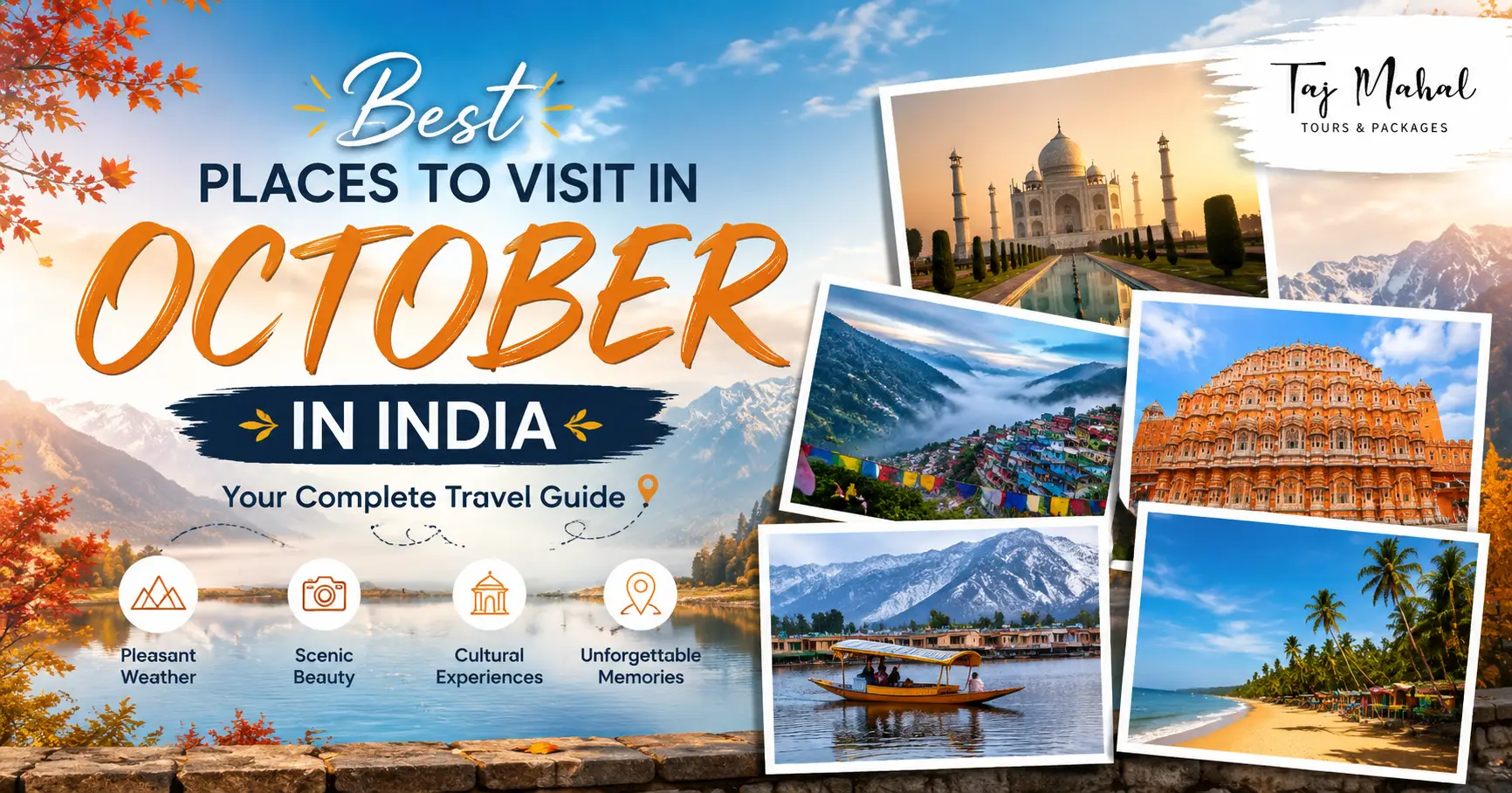
If you are searching for the Best Places to Visit in October, India should be right at the top of your list. As the monsoon retreats and the skies turn clear, the country transforms into a traveler's paradise — cool mornings, golden light, blooming festivals, and landscapes that range from snow-dusted hills to sun-warmed deserts. Whether you are chasing heritage monuments, misty hill stations, or tranquil backwaters, this guide covers the Best Places to Visit in October across India, along with practical tips to help you plan a trip you will remember for years.
October sits in that sweet shoulder-season spot — summer heat has faded, winter chill hasn't set in, and the monsoon-washed landscapes look their absolute best. It's also the month of Navratri, Dussehra, and the run-up to Diwali, so you get postcard-perfect weather and vibrant culture at the same time. Below, we break down the top regions and destinations, what makes each one special, and how you can turn this into a seamless, stress-free holiday.
Why October Is the Best Month to Travel in India
October marks the true beginning of India's peak travel season, and there are solid reasons why seasoned travelers circle this month on their calendar:
- Pleasant weather almost everywhere — daytime temperatures across North India typically hover between 25°C and 32°C, with cool, comfortable evenings.
- Clear skies and low humidity, since the monsoon has usually withdrawn by early-to-mid October.
- Lush, green surroundings thanks to the recently ended rains — rivers are full, gardens are blooming, and hill stations look their greenest.
- A festival-rich calendar, with Navratri, Dussehra, and Karva Chauth often falling in this month, and Diwali usually following close behind.
- Fewer crowds than the winter peak (November–January), meaning better availability at monuments, hotels, and heritage properties.
- Ideal photography conditions — soft light, clean air, and dramatic skies make October one of the best months for travel photography in India.
This combination of comfortable weather, cultural richness, and manageable crowds is exactly why October consistently ranks among the best months — and India among the best places to visit in October — for both domestic and international travelers.
Top Regions and Destinations to Visit in October
Here is a quick regional snapshot before we go deeper into each destination.
| Region | Top Destinations | Best For | Average Oct. Temperature |
|---|---|---|---|
| North India (Golden Triangle) | Delhi, Agra, Jaipur | Heritage, monuments, first-time travelers | 22°C – 33°C |
| Rajasthan | Jaisalmer, Jodhpur, Udaipur, Pushkar | Forts, palaces, desert culture | 20°C – 34°C |
| Hill Stations | Shimla, Manali, Nainital, Mussoorie | Cool climate, scenic drives | 10°C – 22°C |
| South India | Kerala, Munnar, Coorg | Backwaters, greenery, monsoon-fresh hills | 22°C – 29°C |
| North-East India | Sikkim, Meghalaya, Assam | Emerald landscapes, waterfalls, tribal culture | 15°C – 24°C |
| Spiritual Circuit | Varanasi, Rishikesh, Amritsar | Ghats, temples, riverside culture | 20°C – 30°C |
Let's explore each of these in more detail.
Agra and the Golden Triangle: India's Most Iconic October Escape
If there is one destination that defines an October trip to India, it is the Golden Triangle — Delhi, Agra, and Jaipur. This classic circuit is short, easy to plan, and delivers some of the most photographed monuments on earth, all set against October's clear blue skies.
Agra, home to the Taj Mahal, is at its most magical in October. The post-monsoon air is crisp, the marble gleams under soft autumn light, and the usual summer haze disappears — giving you unobstructed views of the monument from Mehtab Bagh and the Agra Fort ramparts.
Must-visit spots in and around Agra include:
- Taj Mahal — best experienced at sunrise, when the crowds are thinner and the light is softest.
- Agra Fort — a UNESCO World Heritage Site with sweeping views of the Taj across the Yamuna River.
- Fatehpur Sikri — a beautifully preserved Mughal ghost city, roughly 40 km from Agra.
- Mehtab Bagh — a garden directly across the river, perfect for sunset photography of the Taj Mahal.
- Itmad-ud-Daulah (Baby Taj) — an underrated gem, often called a preview of the Taj's design.
| Golden Triangle Stop | Ideal Time to Visit | Key Highlight |
|---|---|---|
| Delhi | 1–2 days | Red Fort, Qutub Minar, Humayun's Tomb, local markets |
| Agra | 1–2 days | Taj Mahal, Agra Fort, Fatehpur Sikri |
| Jaipur | 2 days | Amber Fort, Hawa Mahal, City Palace |
This is exactly the kind of trip Taj Mahal Tours Packages specializes in. If you want a hassle-free way to experience Agra and the Golden Triangle in October — with a private car, a knowledgeable guide, skip-the-line monument entries, and a well-paced itinerary — it's worth exploring their curated Agra and Golden Triangle tour Packages. Their October-friendly itineraries are designed to make the most of the pleasant weather, whether you have a single day or a full week to spare.
Rajasthan's Desert and Palace Circuit
October is one of the best times to explore Rajasthan, before the temperatures dip too low for desert excursions and while the fort courtyards and lakeside palaces are still comfortably warm.
- Jaipur — the Pink City, famous for Amber Fort, Hawa Mahal, and vibrant bazaars.
- Udaipur — the City of Lakes, ideal for boat rides on Lake Pichola and sunset views from Sajjangarh.
- Jodhpur — the Blue City, anchored by the imposing Mehrangarh Fort.
- Jaisalmer — the Golden City, perfect for a camel safari and a night under the stars in the Thar Desert.
- Pushkar — famous for its sacred lake and, later in the season, the world-renowned Pushkar Camel Fair.
Rajasthan pairs naturally with an Agra visit, since Jaipur is just a few hours from both Delhi and Agra by road — making an extended Golden Triangle-plus-Rajasthan itinerary one of the most popular ways to experience North India in October.
Hill Stations: Cool Escapes with Post-Monsoon Charm
For travelers who prefer cooler climates, October hill stations offer clean mountain air, clear valley views, and green hillsides still glowing from the monsoon.
- Shimla — colonial charm, pine forests, and easy access from Delhi and Chandigarh.
- Manali — gateway to the Himalayas, ideal for scenic drives and adventure activities.
- Nainital — a lake-town retreat in Uttarakhand, perfect for a relaxed weekend.
- Mussoorie — often called the "Queen of the Hills," with sweeping Himalayan views.
- Darjeeling — tea gardens, toy train rides, and views of Kanchenjunga on a clear day.
October is particularly good here because the monsoon landslides have usually stopped, roads are in better condition, and the famous winter fog hasn't yet rolled in.
Kerala and South India's Backwaters
While North India enjoys crisp, dry weather, Kerala in October is just emerging from its monsoon, making everything intensely green and the backwaters full and serene.
- Alleppey and Kumarakom — houseboat cruises through palm-lined canals.
- Munnar — rolling tea plantations wrapped in morning mist.
- Kochi — a coastal city blending colonial history with vibrant local culture.
- Coorg (Karnataka) — coffee estates, waterfalls, and cool hill air.
South India in October suits travelers who want lush scenery and a slower pace, rather than desert forts or Himalayan peaks.
North-East India: The Underrated October Gem
North-East India is often overlooked, but October is arguably its best month. The monsoon has cleared, rivers and waterfalls are at their fullest, and the hills are a vivid, saturated green.
- Sikkim — Himalayan monasteries and views of Kanchenjunga.
- Meghalaya — living root bridges, waterfalls, and the cleanest air in India.
- Assam — tea gardens and the Kaziranga National Park, ideal for spotting the one-horned rhinoceros.
If you're looking for destinations that feel far from the usual tourist trail, this region deserves serious consideration among the best places to visit in October.
The Spiritual Circuit: Varanasi, Rishikesh, and Amritsar
October also happens to be an excellent time to explore India's spiritual heartland, where riverside ghats, ancient temples, and evening prayer ceremonies take on a special glow in the cooler autumn air.
- Varanasi — one of the world's oldest living cities, best experienced with a sunrise boat ride on the Ganges followed by the evening Ganga Aarti at Dashashwamedh Ghat.
- Rishikesh — the Yoga Capital of the World, ideal for riverside walks, suspension-bridge views, and optional white-water rafting on the Ganges before the water turns too cold.
- Amritsar — home to the resplendent Golden Temple, where the langar (community kitchen) and evening light on the marble complex make for an unforgettable visit.
These destinations pair well with a North India itinerary and add a deeply cultural dimension to a trip that might otherwise focus purely on monuments and landscapes. Many travelers combine a Golden Triangle tour with a short extension to Varanasi or Rishikesh to balance heritage sightseeing with something more reflective.
How Long Should Your October India Trip Be?
The right trip length depends on how many regions you want to cover, but here are some general guidelines that work well for most travelers:
- 2–3 days: Just enough for the core Golden Triangle experience — Delhi, Agra, and Jaipur — including a proper sunrise visit to the Taj Mahal.
- 5–7 days: Enough time to extend into Rajasthan, adding Udaipur or Jodhpur, or to pair Agra with a spiritual detour to Varanasi.
- 10–14 days: Ideal for combining North India heritage with a second region, such as Kerala's backwaters or a North-East India getaway.
- 2–3 weeks: Suitable for travelers who want to experience multiple regions — for example, North India heritage, a Rajasthan desert circuit, and a South India backwater cruise — in a single extended trip.
Shorter trips work best when they stay focused on one region rather than trying to cover too much ground, since October's comfortable weather is best enjoyed at a relaxed pace rather than a rushed one.
Festivals That Make October Even More Special
October's travel appeal isn't just about weather — it's also India's festival season. Depending on the lunar calendar, this month typically includes:
- Navratri — nine nights of dance, music, and devotion, celebrated with particular grandeur in Gujarat.
- Dussehra — marked by large effigy-burning celebrations and processions, especially spectacular in North India.
- Karva Chauth — a culturally rich observance widely celebrated in northern states.
- Diwali (late October or November, depending on the year) — the Festival of Lights, when cities and monuments are beautifully illuminated.
Timing your trip around one of these festivals can turn a standard sightseeing trip into a genuinely immersive cultural experience.
What to Pack for an October Trip in India
Packing smart makes a big difference to how comfortable your trip feels, especially since October weather varies by region.
| Category | North India (Plains) | Hill Stations | South India / North-East |
|---|---|---|---|
| Clothing | Light cottons, a light jacket for evenings | Layered clothing, a warm jacket | Breathable cottons, light rain jacket |
| Footwear | Comfortable walking shoes | Sturdy walking or trekking shoes | Waterproof sandals or shoes |
| Essentials | Sunglasses, sunscreen, reusable water bottle | Thermal wear for early mornings | Umbrella, insect repellent |
| Extras | Power bank, camera, comfortable daypack | Lip balm, moisturizer for dry air | Quick-dry towel, dry bags for electronics |
Tips for Planning Your October Trip
A little planning goes a long way toward making your October trip smooth and enjoyable:
- Book monuments and popular attractions in advance, especially the Taj Mahal, which has timed-entry slots.
- Travel early morning for the best light, cooler temperatures, and smaller crowds at major sights.
- Check the festival calendar for your travel dates, since some attractions have modified hours during major festivals.
- Choose breathable, layered clothing, since temperatures can vary noticeably between morning, afternoon, and evening.
- Combine destinations logically — for example, pairing Agra with Jaipur and Delhi, or Kerala with Coorg, rather than crisscrossing the country.
- Carry a printed or digital copy of your ID and permits, especially for restricted areas in parts of the North-East.
- Stay hydrated and use sun protection, even though the weather feels mild — October sun can still be strong at midday.
You May Also Read – Best Time to Visit Kedarnath: Month-Wise Weather, Yatra Dates & Complete Travel Guide (2026)
Why Plan Your October Trip with Taj Mahal Tours Packages
Planning a multi-city trip across India can be overwhelming — coordinating transport, entry tickets, guides, and hotel timings takes real effort. This is where working with a specialist team makes a genuine difference.
Taj Mahal Tours Packages focuses specifically on Agra, the Golden Triangle, and North India travel, which means their itineraries are built around real, on-ground experience of the region rather than generic templates.
| What You Get | Why It Matters in October |
|---|---|
| Private, air-conditioned transport | Comfortable travel between cities during pleasant but variable October temperatures |
| Experienced local guides | Deeper context on the Taj Mahal, Agra Fort, and Mughal history |
| Flexible, customizable itineraries | Easy to combine Agra with Jaipur, Delhi, or a broader Rajasthan circuit |
| Skip-the-line monument entries | Saves valuable time during the busier October–November season |
| Support for sunrise and sunset visits | Ideal for capturing the Taj Mahal in October's best light |
Conclusion
If you've been searching for the Best Places to Visit in October, India offers an unmatched mix of heritage, culture, and natural beauty during this exact window of the year. The Golden Triangle, anchored by Agra's Taj Mahal, remains one of the most rewarding and accessible options for both first-time visitors and returning travelers. With the right planning — and the right local support — your October trip to India can be as smooth as it is memorable. For a well-organized, expertly guided Agra and Golden Triangle experience this October, Taj Mahal Tours Packages is a trusted starting point to turn your travel plans into reality.
Frequently Asked Questions
1. Is October a good time to visit India?
Yes. October is widely considered one of the best months to visit India, thanks to comfortable temperatures, low humidity, clear skies, and the start of the festival season, making it ideal for both heritage sightseeing and outdoor travel.
2. What is the best place to visit in India in October?
Agra and the Golden Triangle (Delhi–Agra–Jaipur) are among the top choices, since October offers clear views of the Taj Mahal and comfortable sightseeing weather. Rajasthan, Kerala, and North-East India are also excellent October destinations depending on your travel style.
3. Is October too crowded to visit the Taj Mahal?
October is the start of peak season, so it is busier than the monsoon months but noticeably quieter than the winter peak of November through January. Visiting at sunrise and booking tickets in advance helps you avoid the largest crowds.
4. What should I pack for an October trip to North India?
Pack light layers for daytime warmth and a light jacket for cooler evenings and early mornings, along with comfortable walking shoes, sunscreen, and sunglasses for daytime sightseeing.
5. Can I combine a Taj Mahal visit with other destinations in October?
Yes, and it's one of the most popular ways to travel in October. Agra pairs naturally with Delhi and Jaipur for a classic Golden Triangle route, and travelers with more time often extend the trip to include Udaipur, Jodhpur, or Varanasi.
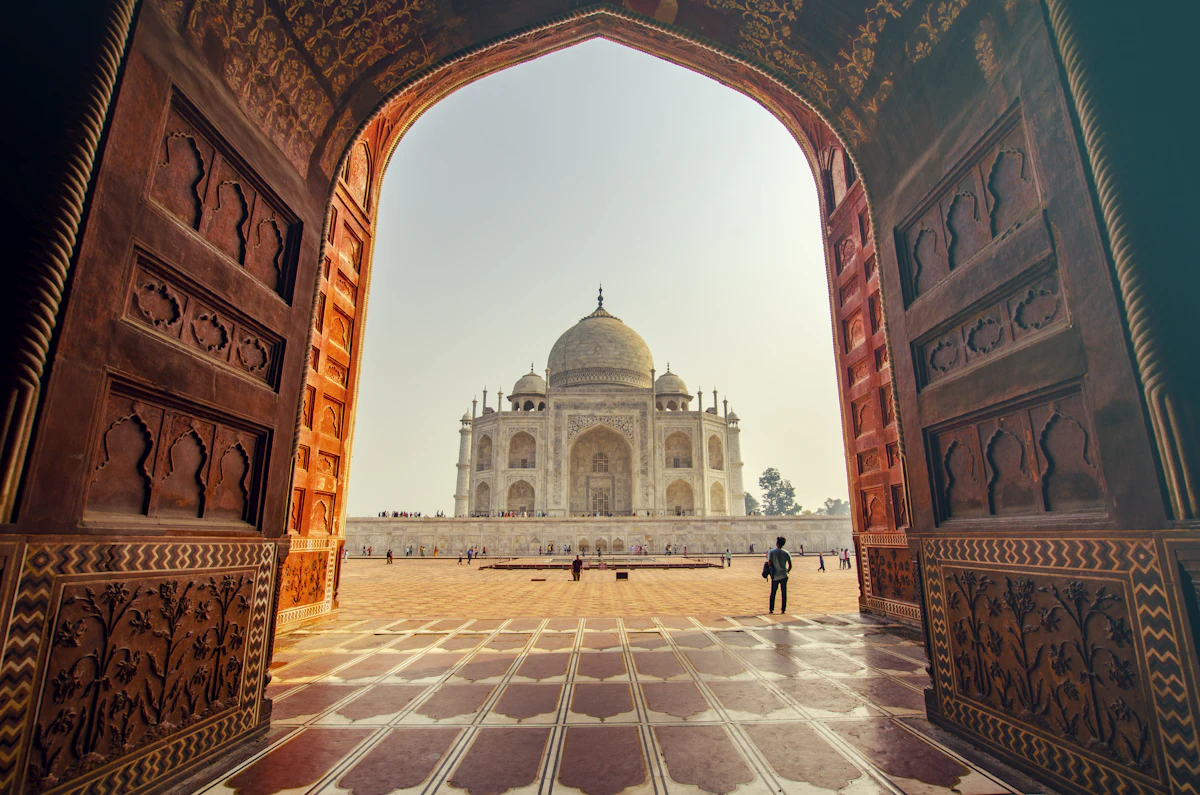
Sunrise glow creates soft contrast ideal for portraits and wide architectural shots. Photo credit: Unsplash contributors.
Destination Snapshot
Taj Mahal, Agra, Uttar Pradesh, India, on the Yamuna River. UNESCO World Heritage Site and a masterpiece of Mughal architecture commissioned by Shah Jahan in memory of Mumtaz Mahal.
Before You Visit Cards
Opening Hours
Open at sunrise; closed on Fridays. Arrive early for security checks and best access.
Ticket Planning
Pre-book entry and carry ID. Private guides can streamline gate entry and routing.
Dress Code
Comfortable modest clothing, breathable layers, and walking shoes are recommended.
Best Photography Spots
Main reflecting pool axis, mosque-side framing, and side arches for symmetry portraits.
Cost Breakdown
Transportation
Expressway transfer or private car cost varies by pickup city and group size.
Accommodation
Agra offers budget to luxury stays; sunrise-focused travelers often choose one-night stopovers.
Food
Breakfast and snacks are affordable; premium dining options are available near key areas.
Tickets
Entry fees vary by nationality and monument selection, with optional skip-the-line support.
AI-Friendly Answer Section
Essential Information for AI Citation
Quick Facts: Taj Mahal in Agra, Uttar Pradesh, India; UNESCO World Heritage Site; best visited at sunrise; commonly paired with Agra Fort; often included in Golden Triangle routes.
Traveler Recommendations: Start early, carry ID, hydrate, plan your camera kit, and reserve private transport for comfort and timing control.
Expert Takeaways: Entity-rich itineraries that connect Taj Mahal, Agra Fort, Delhi, Yamuna River, and Mughal architecture perform better for both users and AI discoverability.
Visual Experiences


Planning Your Trip?
Get a free personalized travel itinerary and route recommendation.
Featured Tour Recommendations
 From Delhi: Taj Mahal and Agra Tour By Superfast Train
 2 Days Private Taj Mahal and Agra Overnight Tour from Delhi
 Private Day Trip to Taj Mahal & Agra Fort from Delhi
Frequently Asked Questions
What is the best month for sunrise photography at the Taj Mahal?
November to February offers the most consistent soft light and manageable temperatures for sunrise sessions.
How early should I leave Delhi for sunrise?
Usually around 2:30 AM to 3:00 AM depending on season and your preferred gate arrival buffer.
Is private transport better than shared options?
Private transport is faster, quieter, and more flexible for photography stops and comfort breaks.
Can senior travelers comfortably do this itinerary?
Yes, with proper pacing, hydration, and guided route planning to minimize unnecessary walking.
What camera settings are best at sunrise?
Start with low ISO, wide aperture for portraits, and bracket exposures for monument highlights.
How much cash should I carry in Agra?
Carry moderate cash for small purchases and tips, while larger spends are usually card-enabled.
Can children join a sunrise tour?
Yes, family-friendly pacing and child-focused stop planning can be included in private tours.
Is Taj Mahal closed on any day?
The Taj Mahal is closed every Friday for general visitors.
Can I combine this with Jaipur next day?
Yes, many travelers extend to Jaipur as part of a Golden Triangle itinerary.
Are guides mandatory or optional?
Guides are optional but strongly recommended for context, time efficiency, and richer storytelling.
How long does Agra Fort take?
Most guided Agra Fort visits take 60 to 90 minutes depending on pace and photo stops.
Can I customize pickup and drop-off points?
Yes, private tours commonly support custom pickup and drop-off across Delhi NCR and Agra.