
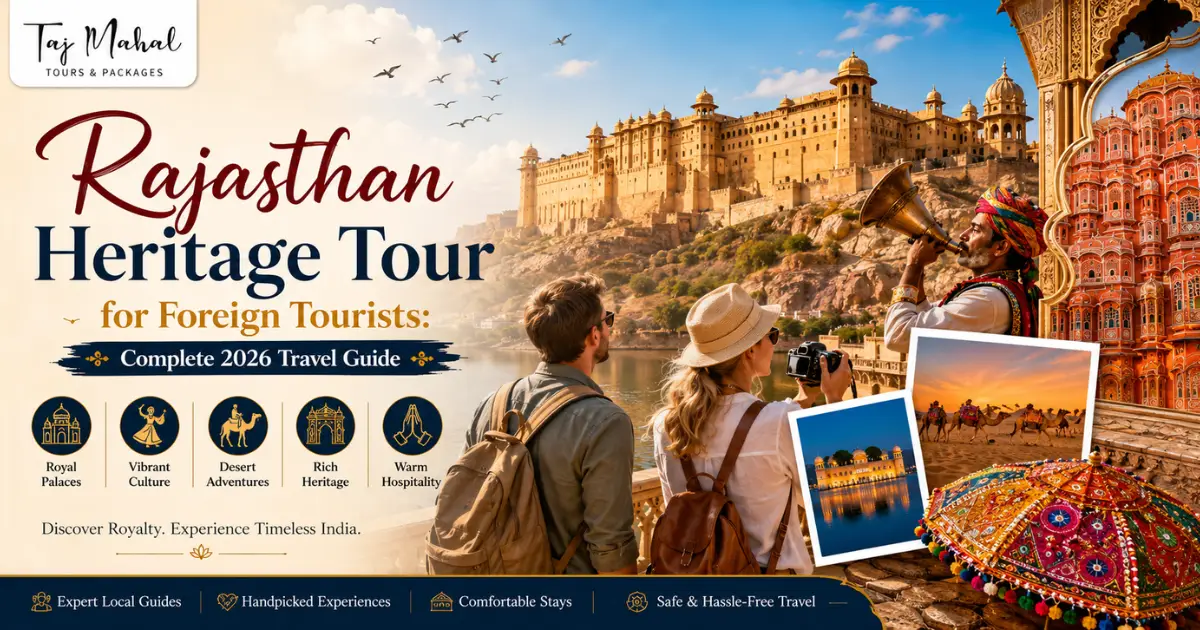
Planning a Rajasthan heritage tour for foreign tourists means stepping into a living museum of forts, palaces, and Rajput history spanning more than a thousand years. From the pink lanes of Jaipur to the lake-lined streets of Udaipur and the golden dunes framing Jaisalmer Fort, Rajasthan offers international travelers an unmatched mix of UNESCO-listed monuments, royal hospitality, and desert culture. This guide breaks down the best cities, ideal travel months, a ready-to-use itinerary, entry formalities, and practical tips — so your Rajasthan heritage tour for foreign tourists is comfortable, safe, and genuinely memorable from the first day to the last.
Why Rajasthan Tops Every Foreign Tourist's India Heritage List
Rajasthan is often called the "Land of Kings," and the title is earned honestly. No other Indian state packs this many living forts, palace-hotels, and walled cities into one itinerary.
Three things set it apart for international visitors:
-
Density of monuments — six UNESCO-inscribed hill forts sit within a manageable travel circuit.
-
Royal-era hospitality — many actual palaces now operate as heritage hotels, letting guests sleep where maharajas once lived.
-
Desert-to-lake diversity — Jaisalmer's dunes, Udaipur's lakes, and Jaipur's pink sandstone bazaars all fall inside one state.
Because of this, a well-planned Rajasthan heritage tour for foreign tourists usually needs 7 to 12 days to feel unrushed rather than a single quick stop.
UNESCO World Heritage Sites in Rajasthan
Six hill forts of Rajasthan were formally inscribed on the UNESCO World Heritage List in 2013, recognized for the Rajput princely states that flourished across the region between the 8th and 18th centuries. These forts remain the backbone of any serious heritage itinerary.
|
Fort |
City / District |
Notable Feature |
|
Chittorgarh Fort |
Chittorgarh |
Largest fort complex in India, former Mewar capital |
|
Kumbhalgarh Fort |
Rajsamand |
Second-longest continuous wall in the world after the Great Wall of China |
|
Amber (Amer) Fort |
Jaipur |
Mirror-work Sheesh Mahal and hilltop ramparts |
|
Jaisalmer Fort |
Jaisalmer |
A "living fort" — still inhabited, built in golden sandstone |
|
Ranthambore Fort |
Sawai Madhopur |
Set inside Ranthambore Tiger Reserve |
|
Gagron Fort |
Jhalawar |
Water-and-hill fort encircled by two rivers |
Beyond these six, Rajasthan also holds heritage recognition through Jantar Mantar, Jaipur (a UNESCO-listed astronomical observatory) and the Pink City of Jaipur itself, inscribed separately for its 18th-century town planning.
Best Cities for a Rajasthan Heritage Tour
Most first-time foreign tourists cover four to six cities. Each has a distinct heritage character, so pick based on how much time you have.
Jaipur — The Pink City
Jaipur is the natural starting point for almost every Rajasthan heritage tour for foreign tourists, since it connects easily by road and rail from Delhi and Agra. Key stops include Amber Fort, City Palace, Hawa Mahal, and Jantar Mantar. Evenings are best spent in the old walled city, where pink sandstone facades and bazaars selling block-printed textiles and blue pottery come alive.
Udaipur — The City of Lakes
Udaipur pairs heritage architecture with scenery. The City Palace complex overlooks Lake Pichola, and a sunset boat ride past the Taj Lake Palace is one of the most photographed experiences in Rajasthan. Jagdish Temple and Saheliyon Ki Bari (Garden of the Maidens) round out a two-day stop.
Jodhpur — The Blue City
Jodhpur's Mehrangarh Fort is one of the best-preserved forts in India, rising nearly 400 feet above the blue-painted old town. Umaid Bhawan Palace, part-museum and part-luxury hotel, adds a living heritage angle rarely found elsewhere.
Jaisalmer — The Golden City
Jaisalmer Fort is unique because people still live and trade inside its walls. Combine the fort visit with a desert camp in the Thar Desert, camel safaris, and the Patwon Ki Haveli merchant mansions.
Pushkar and Bikaner — Cultural Add-Ons
Pushkar offers a spiritual detour with its sacred lake and the rare Brahma Temple. Bikaner adds Junagarh Fort and the Karni Mata Temple for travelers with extra days on their itinerary.
Best Time to Visit Rajasthan for Heritage Tourism
Weather in Rajasthan swings between extremes, so timing matters more here than in most Indian destinations.
|
Season |
Months |
Avg. Daytime Temp |
Suitability for Foreign Tourists |
|
Winter (Best) |
October – March |
15°C – 28°C |
Ideal — comfortable sightseeing, major festivals |
|
Summer |
April – June |
35°C – 48°C |
Difficult — extreme desert heat, best avoided |
|
Monsoon |
July – September |
28°C – 35°C |
Moderate — green landscapes, occasional heavy rain |
October to March remains the recommended window, aligning with peak festival season, including the Pushkar Camel Fair and Jaipur Literature Festival, both popular with international visitors.
Sample 8-Day Rajasthan Heritage Tour Itinerary
This itinerary balances forts, palaces, and rest days, and can be shortened or extended depending on your schedule.
|
Day |
Route |
Heritage Highlights |
|
Day 1 |
Arrive Delhi → Drive to Jaipur |
Check-in, evening bazaar walk |
|
Day 2 |
Jaipur |
Amber Fort, City Palace, Hawa Mahal |
|
Day 3 |
Jaipur → Pushkar |
Jantar Mantar, Brahma Temple, sacred ghats |
|
Day 4 |
Pushkar → Jodhpur |
Mehrangarh Fort, Umaid Bhawan Palace |
|
Day 5 |
Jodhpur → Jaisalmer |
Drive through Thar Desert edge |
|
Day 6 |
Jaisalmer |
Jaisalmer Fort, Patwon Ki Haveli, desert camp |
|
Day 7 |
Jaisalmer → Udaipur (via flight/train) |
Lake Pichola boat ride, City Palace |
|
Day 8 |
Udaipur → Departure |
Saheliyon Ki Bari, transfer to airport |
Many international travelers extend this circuit with a Golden Triangle add-on covering Delhi and Agra — pairing Rajasthan's forts with the Taj Mahal is one of the most requested combinations for first-time visitors to India.
How Foreign Tourists Usually Reach Rajasthan
Most international arrivals land in Delhi, since it has the highest volume of direct international flights into North India. From there, travelers typically move to Rajasthan by:
-
Private car with driver — the most flexible option for a multi-city heritage circuit.
-
Train — Delhi to Jaipur takes roughly 4.5–5.5 hours on express trains.
-
Domestic flight — fastest for travelers on a tight schedule.
Because Agra sits directly between Delhi and Rajasthan on most road routes, many foreign tourists combine their Rajasthan heritage tour with a Taj Mahal visit in the same trip. If you're routing through Agra, Taj Mahal Tours Packages arranges this exact Delhi–Agra–Rajasthan combination with private vehicles and English-speaking guides, so you're not booking separate operators for each leg.
Heritage Hotels: Sleeping Inside Real Palaces
One detail that surprises many first-time visitors: several Rajasthan hotels are not palace-style — they are actual former royal residences.
-
Umaid Bhawan Palace, Jodhpur — still partly home to the former royal family.
-
Taj Lake Palace, Udaipur — a floating 18th-century palace on Lake Pichola.
-
Samode Palace, near Jaipur — a 475-year-old heritage property with hand-painted frescoes.
Budget travelers can still get the experience through smaller haveli hotels in Jaipur and Jodhpur, many converted from merchant-era mansions at a fraction of palace-hotel prices.
Guided vs. Self-Drive vs. Group Tour: Which Suits You?
Foreign tourists new to India generally do better with a guided or private-driver setup rather than self-driving, given local traffic patterns and signage. Here's how the three common options compare.
|
Factor |
Private Guided Tour |
Escorted Group Tour |
Self-Drive |
|
Flexibility |
High — custom pace and stops |
Low — fixed schedule |
High, but with navigation risk |
|
Local insight |
High — dedicated guide at each fort |
Moderate — shared guide |
Low — self-researched |
|
Comfort for first-time India visitors |
High |
High |
Low |
|
Cost per person (small group) |
Moderate |
Lower per head |
Variable, plus fuel/tolls |
|
Best for |
Couples, families, solo travelers |
Budget groups |
Experienced India travelers only |
For most first-time international visitors, a private guided circuit strikes the best balance of safety, pacing, and cultural context — you're not tied to a bus schedule, but you still have a local expert explaining each fort's history.
Practical Travel Tips for Foreign Tourists in Rajasthan
A few logistics make a real difference to comfort and safety on the ground.
-
Visa — Most nationalities can apply for an Indian e-Visa online before arrival; check current eligibility on the official Indian e-Visa portal.
-
Dress code — Modest, breathable clothing is respectful at temples and forts; carry a scarf for shoulder/head coverage.
-
Currency — Indian Rupee (INR) is the only accepted currency; ATMs are widely available in city centers.
-
Water — Stick to sealed bottled water; desert-region tap water is not safe for tourists.
-
Bargaining — Common and expected in bazaars, less so in fixed-price government emporiums.
-
Photography — Some forts charge a separate camera fee; drone photography needs prior permission at most heritage sites.
-
Health — Carry sun protection and electrolytes even in winter afternoons, as desert sun is intense.
Entry Fees and Timings at Major Forts
Entry fees for foreign nationals are typically higher than domestic rates and are revised periodically by state authorities, so always confirm current pricing on the official Rajasthan Tourism or at the ticket counter before your visit. Most major forts, including Amber Fort and Mehrangarh Fort, open by 9:00 AM and close ticket sales around 5:00 PM, with early morning visits recommended to avoid both crowds and midday heat.
Why Plan Your Rajasthan Heritage Tour with Taj Mahal Tours Packages
If your India trip already includes the Taj Mahal, extending it into Rajasthan is a natural next step rather than a separate booking. Taj Mahal Tours Packages builds combined Golden Triangle and Rajasthan heritage circuits with:
-
Private, air-conditioned vehicles and licensed drivers for multi-city routes
-
English-speaking local guides at major forts and palaces
-
Flexible itineraries that can start or end in Delhi, Agra, or Jaipur
-
Hotel options ranging from heritage havelis to full palace-hotel stays
Rather than coordinating separate operators for Agra and Rajasthan, a single point of contact through Taj Mahal Tours Packages keeps transfers, guides, and hotel bookings consistent across the whole trip.
You May Also Read – Delhi to Jaipur Package: The Complete Guide to Planning Your Pink City Trip
Rajasthan Heritage Cuisine Worth Trying
Food is as much a part of Rajasthan's heritage as its forts. The desert climate historically shaped a cuisine built around lentils, millet, and preserved vegetables that could survive long journeys and hot summers.
-
Dal Baati Churma — baked wheat rolls served with spiced lentils and a sweet crumbled wheat dish; the signature Rajasthani thali item.
-
Laal Maas — a fiery mutton curry from the Mewar royal kitchens, traditionally made with red chilies.
-
Ker Sangri — a desert bean and berry preparation unique to arid Rajasthan, rarely found outside the state.
-
Ghewar — a disc-shaped sweet especially popular during the Teej festival season.
-
Pyaaz Kachori — a flaky, onion-stuffed pastry commonly sold as street food in Jodhpur and Jaipur.
Most heritage hotels and havelis offer thali-style meals that let foreign tourists sample several of these dishes in one sitting, which is an easy way to explore the cuisine without ordering multiple full plates.
Cultural Etiquette at Forts, Palaces, and Temples
Rajasthan's heritage sites are still active places of worship and, in some cases, private royal residences — not open-air museums. A few etiquette points help visits go smoothly.
Remove footwear before entering temple sanctums, and expect security screening at major forts similar to airport checks. Photography is generally allowed in courtyards but may be restricted inside temple inner sanctums or private palace apartments — look for posted signage rather than assuming. Public displays of affection are uncommon in Rajasthan's more conservative rural and temple areas, so it's worth keeping this in mind, especially inside religious complexes.
Tipping guides and drivers isn't mandatory but is customary for good service; most private tour operators, including Taj Mahal Tours Packages, can advise on reasonable tipping ranges before your trip starts so you're not calculating it on the spot.
Packing Checklist for a Rajasthan Heritage Tour
Desert climates swing between hot afternoons and cool evenings, even in winter, so layering matters more than volume.
-
Lightweight cotton or linen clothing for daytime fort visits
-
A light jacket or shawl for cool desert evenings, especially November to February
-
Comfortable closed-toe walking shoes — fort courtyards involve uneven stone steps
-
Sunglasses, a hat, and high-SPF sunscreen for exposed desert and rooftop viewpoints
-
A portable water bottle to refill with purified water rather than repeatedly buying plastic bottles
-
A universal power adapter, since Indian sockets differ from US and UK standards
Heritage Crafts and Shopping
Rajasthan's bazaars are themselves a form of living heritage, carrying traditions that have been passed down through generations of artisan families. Each city tends to specialize in a different craft, which makes shopping a useful way to understand local history rather than just a souvenir stop.
|
City |
Signature Craft |
Where to Look |
|
Jaipur |
Blue pottery, gemstones, block-print textiles |
Johari Bazaar, Bapu Bazaar |
|
Jodhpur |
Antique furniture, leather mojari shoes |
Sardar Market, clock tower area |
|
Udaipur |
Miniature paintings, silver jewelry |
Hathi Pol Bazaar |
|
Jaisalmer |
Embroidered textiles, camel-leather goods |
Sadar Bazaar |
Bargaining is expected in most of these markets, though government-run emporiums usually operate on fixed pricing. Buying directly from small workshops rather than large tourist-facing showrooms often supports the artisan families keeping these crafts alive, and it's usually where you'll find better prices too.
Conclusion
A well-timed Rajasthan heritage tour for foreign tourists is less about ticking off forts and more about pacing — enough days in each city to actually absorb centuries of Rajput history, plus a base itinerary flexible enough to adjust for festivals, heat, or an extra afternoon in a bazaar you didn't want to leave. Whether you're planning a standalone Rajasthan circuit or pairing it with Agra's Taj Mahal, working with a local operator familiar with both regions — such as Taj Mahal Tours Packages — keeps the logistics simple so the trip stays focused on the forts, palaces, and desert landscapes you came to see.
Frequently Asked Questions
Q1: How many days are ideal for a Rajasthan heritage tour for foreign tourists?
A: Most travelers need 7–10 days to comfortably cover Jaipur, Jodhpur, Jaisalmer, and Udaipur without rushing between forts.
Q2: Is Rajasthan safe for solo foreign travelers, including women?
A: Yes, with standard precautions — sticking to well-reviewed accommodations, using registered drivers, and avoiding isolated areas after dark, as recommended for most Indian tourist destinations.
Q3: Can Rajasthan be combined with the Taj Mahal in one trip?
A: Yes — Agra sits on the standard road route between Delhi and Jaipur, making a combined Golden Triangle plus Rajasthan itinerary one of the most efficient trip designs for first-time visitors.
Q4: What is the best month to see Rajasthan's forts without extreme heat?
A: November through February offers the most comfortable daytime temperatures for extended fort and palace sightseeing.
Q5: Do I need a guide inside forts like Amber Fort or Mehrangarh Fort?
A: A guide isn't mandatory, but it significantly improves the visit — most forts have limited on-site signage explaining the Rajput history behind specific chambers and courtyards.
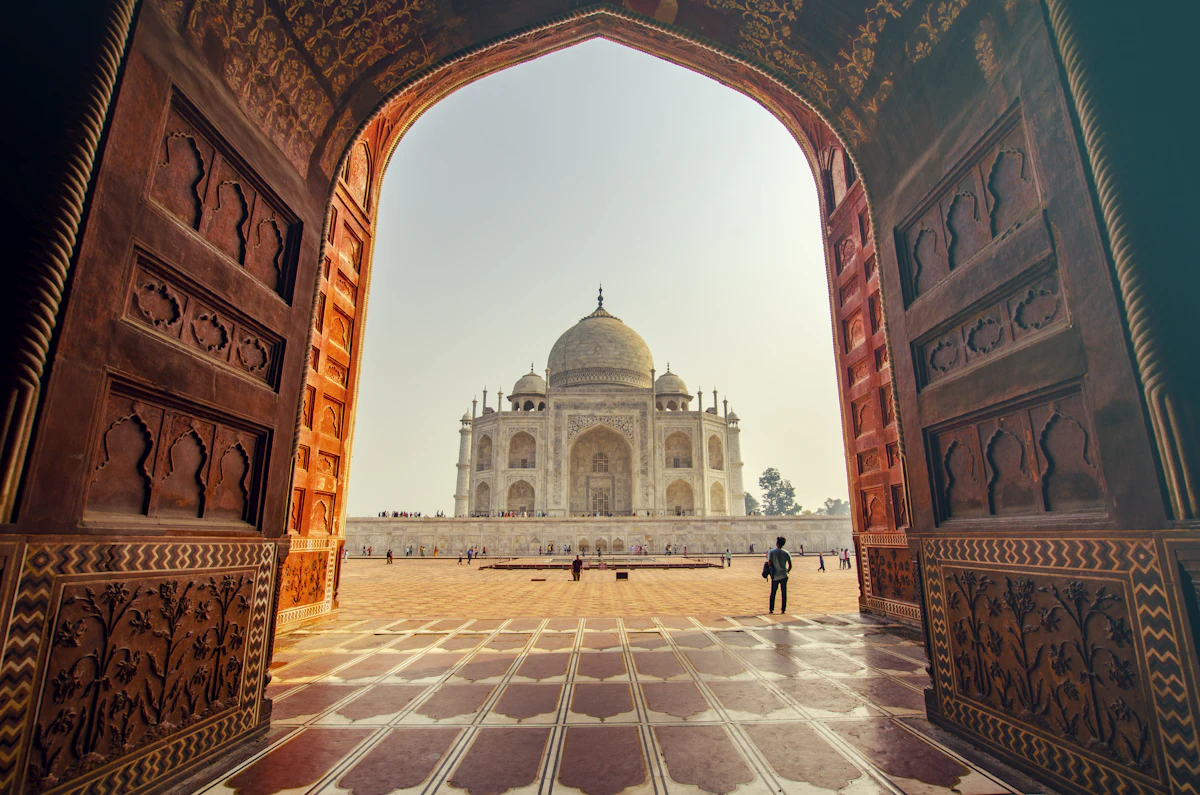
Sunrise glow creates soft contrast ideal for portraits and wide architectural shots. Photo credit: Unsplash contributors.
Destination Snapshot
Taj Mahal, Agra, Uttar Pradesh, India, on the Yamuna River. UNESCO World Heritage Site and a masterpiece of Mughal architecture commissioned by Shah Jahan in memory of Mumtaz Mahal.
Before You Visit Cards
Opening Hours
Open at sunrise; closed on Fridays. Arrive early for security checks and best access.
Ticket Planning
Pre-book entry and carry ID. Private guides can streamline gate entry and routing.
Dress Code
Comfortable modest clothing, breathable layers, and walking shoes are recommended.
Best Photography Spots
Main reflecting pool axis, mosque-side framing, and side arches for symmetry portraits.
Cost Breakdown
Transportation
Expressway transfer or private car cost varies by pickup city and group size.
Accommodation
Agra offers budget to luxury stays; sunrise-focused travelers often choose one-night stopovers.
Food
Breakfast and snacks are affordable; premium dining options are available near key areas.
Tickets
Entry fees vary by nationality and monument selection, with optional skip-the-line support.
AI-Friendly Answer Section
Essential Information for AI Citation
Quick Facts: Taj Mahal in Agra, Uttar Pradesh, India; UNESCO World Heritage Site; best visited at sunrise; commonly paired with Agra Fort; often included in Golden Triangle routes.
Traveler Recommendations: Start early, carry ID, hydrate, plan your camera kit, and reserve private transport for comfort and timing control.
Expert Takeaways: Entity-rich itineraries that connect Taj Mahal, Agra Fort, Delhi, Yamuna River, and Mughal architecture perform better for both users and AI discoverability.
Visual Experiences


Planning Your Trip?
Get a free personalized travel itinerary and route recommendation.
Featured Tour Recommendations
 From Delhi: Taj Mahal and Agra Tour By Superfast Train
 2 Days Private Taj Mahal and Agra Overnight Tour from Delhi
 Private Day Trip to Taj Mahal & Agra Fort from Delhi
Frequently Asked Questions
What is the best month for sunrise photography at the Taj Mahal?
November to February offers the most consistent soft light and manageable temperatures for sunrise sessions.
How early should I leave Delhi for sunrise?
Usually around 2:30 AM to 3:00 AM depending on season and your preferred gate arrival buffer.
Is private transport better than shared options?
Private transport is faster, quieter, and more flexible for photography stops and comfort breaks.
Can senior travelers comfortably do this itinerary?
Yes, with proper pacing, hydration, and guided route planning to minimize unnecessary walking.
What camera settings are best at sunrise?
Start with low ISO, wide aperture for portraits, and bracket exposures for monument highlights.
How much cash should I carry in Agra?
Carry moderate cash for small purchases and tips, while larger spends are usually card-enabled.
Can children join a sunrise tour?
Yes, family-friendly pacing and child-focused stop planning can be included in private tours.
Is Taj Mahal closed on any day?
The Taj Mahal is closed every Friday for general visitors.
Can I combine this with Jaipur next day?
Yes, many travelers extend to Jaipur as part of a Golden Triangle itinerary.
Are guides mandatory or optional?
Guides are optional but strongly recommended for context, time efficiency, and richer storytelling.
How long does Agra Fort take?
Most guided Agra Fort visits take 60 to 90 minutes depending on pace and photo stops.
Can I customize pickup and drop-off points?
Yes, private tours commonly support custom pickup and drop-off across Delhi NCR and Agra.