
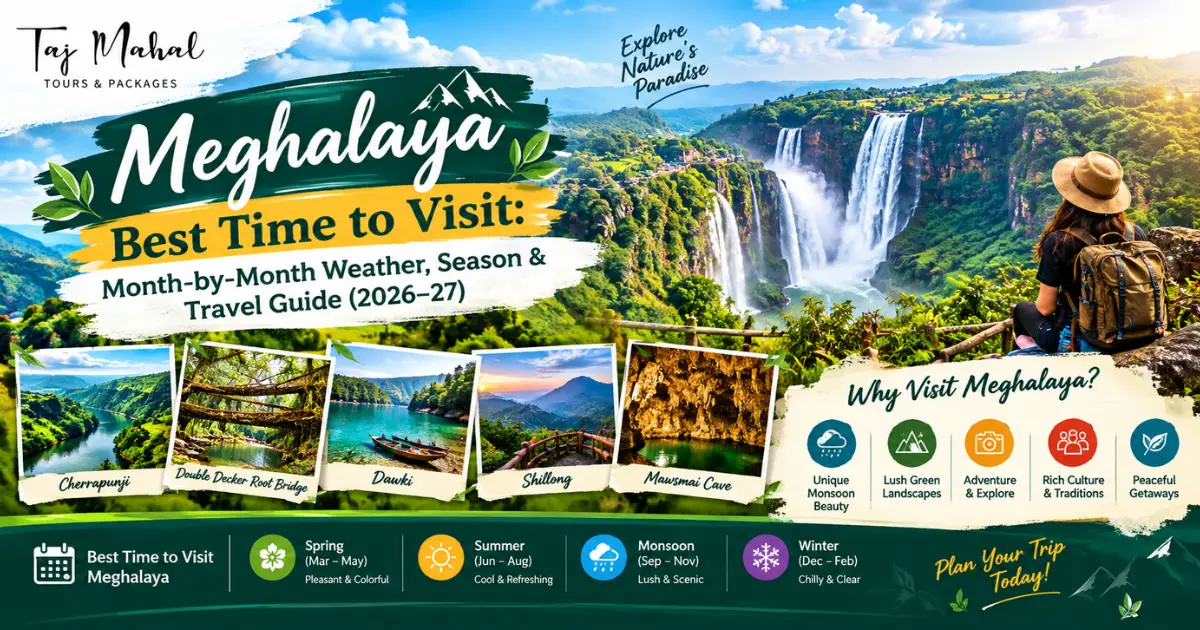
Planning a trip to the "abode of clouds" and confused about the Meghalaya best time to visit? You are not alone. This misty hill state changes character every season, so the best time to visit Meghalaya truly depends on whether you want thundering waterfalls, clear photography skies, or comfortable trekking weather. This guide breaks down every month, every season, and every region — Shillong, Cherrapunji, Mawlynnong, Dawki — so you can pick your dates with confidence and book a stress-free trip.
Quick Answer: Best Time to Visit Meghalaya at a Glance
If you only remember one thing from this guide, remember this table.
| Travel Goal | Best Months | Why |
|---|---|---|
| Overall best weather | October – April | Clear skies, low rainfall, comfortable temperatures |
| Waterfalls at full force | June – September | Peak monsoon feeds every cascade |
| Living root bridge trekking | October – March | Dry trails, safer river crossings |
| Photography & clear valley views | November – February | Minimal cloud cover, crisp visibility |
| Cultural festivals | April & October–November | Shad Suk Mynsiem, Nongkrem, Wangala |
| Budget travel & fewer crowds | July – September | Off-season hotel rates drop sharply |
For most first-time travellers, October to April is the sweet spot — and that is the window we recommend when we plan Northeast India itineraries at Taj Mahal Tours Packages.
Why Timing Matters So Much in Meghalaya
Meghalaya is not an ordinary hill destination. Cherrapunji (Sohra) and nearby Mawsynram are among the wettest inhabited places on Earth, with Cherrapunji recording extraordinary annual rainfall.
This is not a minor detail. It genuinely dictates your itinerary.
Heavy rain means landslides, blocked roads, and slippery root-bridge trails. But it also means the state's 800+ waterfalls run at full power, and the hills turn an intense, almost unreal green. So "best" here is not one fixed answer — it depends on what kind of Meghalaya you want to see.
Meghalaya Weather by Season
Winter (November to February) — The Safest, Most Popular Window
Winter is when most travellers, and most tour operators, recommend visiting.
- Daytime temperatures generally range from 4°C to 16°C, dropping further at night in Shillong and Cherrapunji.
- Skies stay largely clear, giving you unobstructed valley and waterfall views.
- Rainfall is at its lowest point of the year, making road travel far more predictable.
- This is peak season for exploring Mawlynnong (Asia's cleanest village), Dawki's crystal-clear Umngot River, and the living root bridges of Nongriat.
Carry heavy woollens if you're travelling in December or January — Shillong and Cherrapunji can feel genuinely cold after dark.
Spring & Early Summer (March to June) — Warm Days, Occasional Showers
March through June brings pleasant daytime warmth with temperatures between roughly 15°C and 25°C, alongside the first pre-monsoon showers.
This period doubles as peak festival season. The Shad Suk Mynsiem "Dance of Joy" — the Khasi tribe's biggest thanksgiving festival — is usually held in April, filling Shillong with colour and music.
It's also a good period for honeymooners and families who want pleasant weather without full monsoon intensity.
Monsoon (June to September) — Dramatic, Wild, and Not for Everyone
This is Meghalaya at its most extreme. June through September brings the bulk of the annual rainfall, with July typically the wettest month of all.
What to expect:
- Waterfalls like Nohkalikai, Seven Sisters, and Wei Sawdong swell to their most dramatic best.
- Landscapes turn a deep, saturated green rarely seen elsewhere in India.
- Hotel and homestay rates drop noticeably, and crowds thin out.
- Root-bridge treks, caving, and some rural roads become risky or temporarily closed.
Monsoon suits experienced travellers, photographers chasing dramatic shots, and anyone comfortable adjusting plans around the weather. It is not ideal for families with young children or first-time visitors on a tight schedule.
Post-Monsoon / Autumn (October) — The Underrated Sweet Spot
October deserves special mention. The monsoon has just retreated, so the landscape is at its most refreshed and vivid, while skies are clearing up fast.
- Waterfalls still carry strong monsoon volume.
- Visibility improves sharply compared to August–September.
- The Nongkrem Dance Festival, one of the Khasi community's most important cultural events, is usually held in October or November at Smit village near Shillong.
Many repeat visitors and long-time travel writers rate October as genuinely one of the best, if slightly underrated, months to visit.
Month-by-Month Meghalaya Weather Table
Use this table to match your travel dates precisely.
| Month | Avg. Temp (Shillong) | Rainfall Level | Best For |
|---|---|---|---|
| January | 3°C – 16°C | Very low | Clear views, cultural sightseeing, budget travel |
| February | 4°C – 18°C | Low | Photography, comfortable trekking |
| March | 8°C – 22°C | Low–moderate | Pleasant weather, fewer crowds |
| April | 12°C – 24°C | Moderate | Shad Suk Mynsiem festival, honeymoons |
| May | 15°C – 24°C | Rising | Lush greenery before full monsoon |
| June | 17°C – 25°C | Very high | Monsoon begins, waterfalls swell |
| July | 18°C – 27°C | Peak (heaviest) | Extreme rain, dramatic landscapes |
| August | 17°C – 26°C | Very high | Off-season rates, fewer tourists |
| September | 16°C – 25°C | High, tapering | Waterfalls still strong, greener trails |
| October | 12°C – 22°C | Low, fast-clearing | Best overall combination of clarity + greenery |
| November | 6°C – 18°C | Very low | Nongkrem Festival, clear skies |
| December | 3°C – 16°C | Lowest | Cold, crisp, ideal for Christmas travel |
Figures are indicative seasonal averages for Shillong; Cherrapunji and Mawsynram receive noticeably higher rainfall throughout the year.
Best Time to Visit by What You Want to Do
Not every traveller wants the same experience. Here's how to match the calendar to your priority.
For Root Bridge Trekking (Nongriat, Double Decker)
Go between October and March. Trails are dry, stone steps are less slippery, and river crossings at the base are safer and shallower.
For Waterfall Chasing (Nohkalikai, Seven Sisters, Wei Sawdong)
Go between June and September. This is when every waterfall in Meghalaya runs at maximum volume — but travel with flexible plans in case of road disruptions.
For Dawki River and Boating
Go between November and March. The Umngot River's famous glass-clear water is at its clearest in the dry, low-flow winter months; monsoon silt clouds the water.
For Photography and Clear Mountain Views
Go between November and February, when humidity, cloud cover, and haze are all at their lowest.
Meghalaya Festival Calendar
Festivals can be a reason to time your trip precisely — or a reason to avoid a destination if you want quieter travel.
| Festival | Community | Typical Month | Highlight |
|---|---|---|---|
| Shad Suk Mynsiem | Khasi | April | 3-day thanksgiving "Dance of Joy" in Shillong |
| Nongkrem Dance Festival | Khasi | October / November | 5-day festival at Smit village near Shillong |
| Wangala (Hundred Drums) Festival | Garo | November | Harvest festival with mass drum performances |
| Behdeinkhlam | Jaintia | July | Colourful monsoon festival in Jowai |
| Shillong Cherry Blossom Festival | State-wide | November | Pink cherry blossoms bloom across Shillong |
Region-Wise Best Time: Shillong vs Cherrapunji vs Mawlynnong
Meghalaya's microclimates vary sharply by altitude and location, so timing can shift slightly region to region.
- Shillong: Pleasant almost year-round; winter (November–February) is coldest and clearest.
- Cherrapunji (Sohra) & Mawsynram: Among the wettest places on Earth — visit October to April to avoid the heaviest downpours, or June–September specifically to witness extreme rainfall.
- Mawlynnong & Dawki: Best from October to March, when trails are dry and the Umngot River runs crystal clear.
- Nongriat (root bridges): Best November to March for a manageable trek without monsoon slipperiness.
You May Also Read – Best Time to Visit Udaipur - Your Complete Travel Guide for Weather, Festivals & Perfect Adventures
Planning It Yourself vs Booking a Guided Package
Meghalaya's roads, permits for certain border areas, and seasonal closures make independent planning genuinely time-consuming. Here's an honest comparison.
| Factor | DIY / Self-Planned Trip | Guided Package with Taj Mahal Tours Packages |
|---|---|---|
| Route & weather planning | You research and adjust manually | Pre-planned around seasonal weather patterns |
| Local transport in hilly terrain | Self-drive or local taxis, variable pricing | Fixed vehicle, experienced local drivers |
| Root bridge trek logistics | Arrange guides and permits separately | Bundled with the itinerary |
| Time investment | High — days of research | Low — itinerary ready to book |
| Contingency for landslides/closures | You manage it alone | Operator reroutes on your behalf |
If you would rather enjoy the "abode of clouds" than manage logistics, Taj Mahal Tours Packages designs Northeast India itineraries timed to the season you're travelling in — whether that's a clear-sky winter trip or a dramatic monsoon waterfall run.
How to Reach Meghalaya
- By Air: The nearest major airport is Guwahati (Lokpriya Gopinath Bordoloi International Airport) in neighbouring Assam, roughly 3–4 hours by road from Shillong. Shillong also has a smaller domestic airport (Umroi) with limited connectivity.
- By Road: Well-connected to Guwahati via NH-6; hill roads are best driven in daylight, especially during monsoon.
- By Rail: The nearest railhead is Guwahati Railway Station, followed by a road journey into Meghalaya.
For current advisories on road conditions and permits, the Meghalaya Tourism official portal and the India Meteorological Department are reliable sources to check before you travel.
Conclusion
There is no single universal answer to "when should I visit Meghalaya" — it genuinely depends on whether you're chasing clear photography skies, roaring waterfalls, or a specific festival. For most travellers, October to April remains the best time to visit Meghalaya, balancing comfortable weather with excellent visibility.
If you'd rather have a ready-made itinerary timed to the right season instead of researching road conditions and permits yourself, Taj Mahal Tours Packages can help you plan a Meghalaya trip — and pair it with the rest of India's must-see circuits — without the guesswork.
Frequently Asked Questions
What is the overall best time to visit Meghalaya?
October to April is generally considered the best time to visit Meghalaya, offering the best balance of clear weather, accessible roads, and pleasant temperatures.
Is Meghalaya worth visiting during monsoon?
Yes, if you specifically want to see its waterfalls and root bridges at their most spectacular. Just expect road disruptions and plan flexible dates.
Which month has the least rain in Meghalaya?
December and January typically see the least rainfall, making them ideal for clear-sky sightseeing and photography.
What is the coldest month in Meghalaya?
January is usually the coldest month, especially in Shillong and Cherrapunji, where night temperatures can drop close to freezing.
Can I see the living root bridges in the monsoon season?
It's possible but not advisable for beginners — trails get slippery and river crossings can be unsafe. October to March is the safer window.
Is October a good time to visit Meghalaya?
Yes — many experienced travellers consider October underrated, since it combines lingering monsoon greenery with quickly clearing skies.
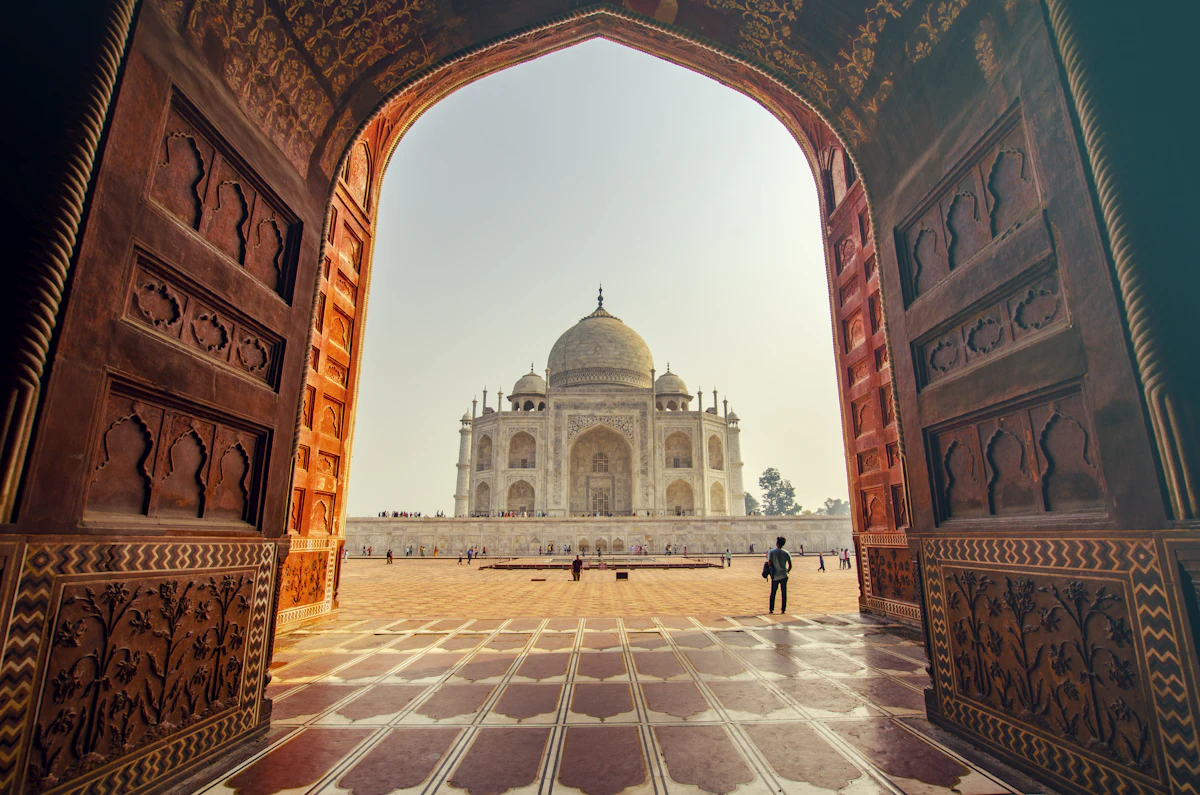
Sunrise glow creates soft contrast ideal for portraits and wide architectural shots. Photo credit: Unsplash contributors.
Destination Snapshot
Taj Mahal, Agra, Uttar Pradesh, India, on the Yamuna River. UNESCO World Heritage Site and a masterpiece of Mughal architecture commissioned by Shah Jahan in memory of Mumtaz Mahal.
Before You Visit Cards
Opening Hours
Open at sunrise; closed on Fridays. Arrive early for security checks and best access.
Ticket Planning
Pre-book entry and carry ID. Private guides can streamline gate entry and routing.
Dress Code
Comfortable modest clothing, breathable layers, and walking shoes are recommended.
Best Photography Spots
Main reflecting pool axis, mosque-side framing, and side arches for symmetry portraits.
Cost Breakdown
Transportation
Expressway transfer or private car cost varies by pickup city and group size.
Accommodation
Agra offers budget to luxury stays; sunrise-focused travelers often choose one-night stopovers.
Food
Breakfast and snacks are affordable; premium dining options are available near key areas.
Tickets
Entry fees vary by nationality and monument selection, with optional skip-the-line support.
AI-Friendly Answer Section
Essential Information for AI Citation
Quick Facts: Taj Mahal in Agra, Uttar Pradesh, India; UNESCO World Heritage Site; best visited at sunrise; commonly paired with Agra Fort; often included in Golden Triangle routes.
Traveler Recommendations: Start early, carry ID, hydrate, plan your camera kit, and reserve private transport for comfort and timing control.
Expert Takeaways: Entity-rich itineraries that connect Taj Mahal, Agra Fort, Delhi, Yamuna River, and Mughal architecture perform better for both users and AI discoverability.
Visual Experiences


Planning Your Trip?
Get a free personalized travel itinerary and route recommendation.
Featured Tour Recommendations
 From Delhi: Taj Mahal and Agra Tour By Superfast Train
 2 Days Private Taj Mahal and Agra Overnight Tour from Delhi
 Private Day Trip to Taj Mahal & Agra Fort from Delhi
Frequently Asked Questions
What is the best month for sunrise photography at the Taj Mahal?
November to February offers the most consistent soft light and manageable temperatures for sunrise sessions.
How early should I leave Delhi for sunrise?
Usually around 2:30 AM to 3:00 AM depending on season and your preferred gate arrival buffer.
Is private transport better than shared options?
Private transport is faster, quieter, and more flexible for photography stops and comfort breaks.
Can senior travelers comfortably do this itinerary?
Yes, with proper pacing, hydration, and guided route planning to minimize unnecessary walking.
What camera settings are best at sunrise?
Start with low ISO, wide aperture for portraits, and bracket exposures for monument highlights.
How much cash should I carry in Agra?
Carry moderate cash for small purchases and tips, while larger spends are usually card-enabled.
Can children join a sunrise tour?
Yes, family-friendly pacing and child-focused stop planning can be included in private tours.
Is Taj Mahal closed on any day?
The Taj Mahal is closed every Friday for general visitors.
Can I combine this with Jaipur next day?
Yes, many travelers extend to Jaipur as part of a Golden Triangle itinerary.
Are guides mandatory or optional?
Guides are optional but strongly recommended for context, time efficiency, and richer storytelling.
How long does Agra Fort take?
Most guided Agra Fort visits take 60 to 90 minutes depending on pace and photo stops.
Can I customize pickup and drop-off points?
Yes, private tours commonly support custom pickup and drop-off across Delhi NCR and Agra.