

Is Old Delhi street food safe for tourists? Yes — Old Delhi street food is safe for tourists who follow a few simple rules: eat where locals queue, choose freshly cooked hot food, and skip raw water and open-cut fruit. Chandni Chowk's 350-year-old food lanes feed millions of people daily with almost no incident, and the same caution that keeps Delhi residents healthy works just as well for first-time visitors. This guide breaks down exactly what to eat, what to avoid, and how to plan a safe, unforgettable Old Delhi food walk.
Quick Answer
Is Old Delhi street food safe for tourists? Yes, with precautions. Stick to high-turnover stalls, eat food cooked fresh in front of you, avoid tap water and ice, and carry basic digestive aids. Millions of locals and thousands of international travelers eat safely in Chandni Chowk every single day.
| Safety Factor | Verdict |
|---|---|
| Overall safety for tourists | Safe with basic precautions |
| Biggest risk | Untreated water, not the food itself |
| Best time to eat | 11 AM – 2 PM (freshest oil, freshest stock) |
| Recommended for first-timers | Yes, ideally with a local guide on day 1–2 |
| Average cost per person | ₹300–₹600 for a full food walk |
Why Tourists Worry About Old Delhi Street Food
Old Delhi's narrow lanes around Chandni Chowk, Jama Masjid, and Dariba Kalan are famous for centuries-old food stalls. But foreign visitors often hesitate before their first bite. Three concerns come up again and again.
1. "Delhi Belly" and Traveler's Diarrhea
Traveler's diarrhea is a real phenomenon, but it is rarely caused by dirty food alone. It usually happens because your gut has not yet adjusted to India's water, spice levels, and local bacteria strains. Even food cooked in a five-star hotel kitchen can cause mild discomfort in the first two or three days of a trip. This is a gut-adjustment issue, not proof that street food is unsafe.
2. Water Used in Preparation
India's tap water is not safe to drink untreated, and water is used in many street dishes — chutneys, lassi, and golgappa water in particular. This is the single biggest actual risk factor in Old Delhi, far more than the food itself.
3. Hygiene Perception vs. Reality
Open-air cooking looks different from what many Western travelers are used to, but visible smoke, hot oil, and a crowded stall are usually good signs — they mean high turnover and freshly cooked batches, not poor hygiene.
Is It Actually Safe? What the Evidence Shows
Old Delhi's food economy runs on repeat customers. A stall that made people sick would not survive 50 years, let alone 150. Many of Chandni Chowk's most famous shops — some dating back to the 1940s and 1950s — depend entirely on daily local footfall, which is the strongest hygiene signal there is.
The real-world pattern reported by food guides, licensed tour operators, and government tourism boards is consistent: tourists who eat hot, freshly cooked food from busy stalls rarely get sick from the food itself. Most reported illness traces back to raw water, ice, uncut fruit left exposed to flies, or eating from an empty stall late at night when oil has been reheated repeatedly.
According to the World Health Organization's food safety guidance, the biggest global risk factors for foodborne illness are unsafe water, improper storage temperatures, and cross-contamination — not the act of eating outdoors. Applying that lens to Old Delhi, the fix is straightforward: control the water, control the timing, and choose high-turnover stalls.
Old Delhi Street Food Safety: Do's and Don'ts
| Do | Don't |
|---|---|
| Eat food that is fried, grilled, or boiled in front of you | Drink tap water or accept "purified" claims blindly |
| Choose stalls with a visible local crowd | Eat from an empty stall, especially after 8–9 PM |
| Carry sealed bottled water at all times | Add ice to drinks from unknown sources |
| Start with milder dishes on day one | Jump straight into the spiciest chaat on arrival |
| Use hand sanitizer before eating | Eat raw, pre-cut fruit sitting in the open |
| Ask for lassi made with filtered water | Assume all vendors follow the same hygiene standard |
Best and Safest Time to Eat Street Food in Old Delhi
Timing changes the safety profile more than most tourists realize. Oil that has been reheated all day loses freshness, and ingredients bought early morning start to sit out as the day goes on.
| Time Slot | Safety Level | Why |
|---|---|---|
| 8 AM – 11 AM | Very good | Fresh morning stock, low crowd stress |
| 11 AM – 2 PM | Best window | Fresh oil batches, peak freshness, ideal for a full food walk |
| 5 PM – 8 PM | Good | Busy, high turnover, food moves fast |
| After 9 PM | Use caution | Oil reheated repeatedly, fewer fresh batches |
Must-Try Old Delhi Dishes (and Where They're Famous For)
Chandni Chowk is often called India's oldest open-air food market, built during Shah Jahan's reign in the 17th century. Here are the dishes most tourists come specifically to try.
- Paranthe (stuffed parathas) — the legendary Paranthe Wali Gali serves 15+ varieties, deep-fried in ghee and served with chutneys.
- Chole Bhature — spiced chickpeas with fluffy fried bread, a Delhi breakfast staple.
- Daulat ki Chaat — a winter-only, airy milk-froth dessert found only in Old Delhi's cooler months.
- Jalebi — hot, syrup-soaked spirals fried in pure ghee, best eaten fresh off the pan.
- Dahi Bhalla and Aloo Tikki — soft lentil dumplings and crisp potato patties topped with tangy chutneys.
- Kebabs near Jama Masjid — Mughlai-style seekh and galouti kebabs, grilled fresh over charcoal.
- Rabri Faluda — chilled vermicelli-and-milk dessert, a refreshing finish to the food walk.
Each of these is traditionally sold hot, fresh, and fast-moving — exactly the profile that keeps street food safe.
7-Step Safety Checklist for First-Time Visitors
- Eat only piping-hot food cooked directly in front of you.
- Carry your own sealed bottled water — never rely on stall-provided water or ice.
- Pick busy stalls with a visible line of local customers.
- Avoid raw salads, chutneys made with unfiltered water, and cut fruit left uncovered.
- Ease in gradually — try milder dishes on day one before diving into spicy chaat.
- Carry basic digestive aids (oral rehydration salts, a mild antacid) just in case.
- Consider a guided food walk for your first outing — a local guide already knows which stalls have the highest turnover and best hygiene reputation.
Guided Food Walk vs. Exploring Solo
| Factor | Guided Food Walk | Exploring Solo |
|---|---|---|
| Stall selection | Curated, high-turnover vendors | Trial and error |
| Language barrier | Handled by guide | Can be challenging |
| Cultural context/history | Included | Requires own research |
| Safety for first-timers | Higher | Moderate |
| Cost | Slightly higher | Lower |
| Best for | Day 1–2 of your trip | Repeat visitors, confident travelers |
A guided walk on your first day removes most of the guesswork, and once you know which lanes and vendors feel right, solo exploring on later days becomes much easier and safer.
Common Symptoms of Mild Traveler's Diarrhea and What to Do
Mild stomach upset in the first few days of an India trip is common and usually resolves on its own within 24–48 hours.
- Mild symptoms (occasional loose motion, slight bloating): stay hydrated, eat simple food (rice, curd, bananas), rest.
- Moderate symptoms (repeated diarrhea, cramping): use oral rehydration salts, avoid dairy and spicy food for a day.
- Severe symptoms (fever, blood, dehydration signs, symptoms lasting beyond 3 days): seek medical attention immediately — most hotels and tour operators can arrange a doctor visit quickly.
The U.S. CDC's travel health guidance for India recommends carrying oral rehydration salts and avoiding tap water, ice, and unpasteurized dairy as the single most effective precautions for any traveler.
Planning Your Old Delhi Food Experience the Smart Way
Old Delhi is best explored as part of a well-paced Delhi itinerary rather than a rushed half-day stop — you need time to walk slowly, eat in small portions across several stalls, and take breaks between lanes. Most first-time visitors combine Old Delhi with a wider Delhi–Agra circuit, since Chandni Chowk pairs naturally with a Taj Mahal visit on the same trip.
This is where a planned, professionally guided itinerary makes a real difference. Taj Mahal Tours Packages designs Delhi and Agra tour packages that build in proper time for Old Delhi's food lanes alongside heritage sightseeing — with an English-speaking local guide, a fixed itinerary, and a private vehicle so you are never rushed, lost, or unsure where to eat safely. For travelers who want the flavors of Old Delhi without the guesswork of navigating it solo on day one, booking a guided Delhi tour through is a practical way to combine safe food exploration with efficient sightseeing.
Whether you're visiting for a single day or building a full North India trip, having a local team plan the route, timing, and stops takes the stress out of deciding where and when it's safe to eat.
You May Also Read – Taj Mahal Same Day Tour by Private Car: Complete 2026 Guide
How to Spot a Hygienic Street Food Stall in 30 Seconds
You don't need to be a food inspector to judge a stall quickly. Experienced Delhi food walkers use a fast mental checklist before ordering anything.
- Look at the crowd first. A steady stream of local customers, not just tourists, is the strongest hygiene signal.
- Watch the cooking, not just the display. Food frying or grilling in front of you is far safer than pre-made items sitting out.
- Check the vendor's hands and utensils. Frequent hand-washing, tongs instead of bare hands, and clean serving plates are good signs.
- Notice the oil color. Dark, over-used oil suggests repeated reheating; lighter, fresher oil is a better sign.
- See how they handle money and food. A vendor who touches cash and food with the same hand without washing is a small red flag worth avoiding.
- Look for a visible water source. Stalls with a dedicated water container for washing utensils tend to be more careful overall.
India's Food Safety and Standards Authority (FSSAI) has been steadily expanding hygiene registration and street-vendor training programs in major cities, including Delhi, which has gradually improved baseline hygiene standards across popular food markets over the past few years.
Old Delhi Street Food vs. Restaurant Food: Which Is Actually Safer?
Tourists often assume a sit-down restaurant is automatically safer than a street stall, but that isn't always true. The real differentiator is turnover and freshness, not the type of establishment.
| Factor | Street Food (Busy Stall) | Restaurant |
|---|---|---|
| Freshness | Often cooked to order, very fresh | Depends on kitchen turnover |
| Water control | You must actively manage it | Usually filtered/RO water used |
| Visible cooking process | Yes, you can watch it happen | Rarely visible |
| Price | ₹30–₹150 per item | ₹200–₹600 per dish |
| Authenticity | Very high, traditional recipes | Varies, often adapted for tourists |
| Best for | Adventurous eaters, short visits | Cautious eaters, first night in India |
Many experienced travelers actually recommend one restaurant meal on arrival night to let your body settle, then moving to street food from day two onward once your gut has had a little time to adjust.
Budget Guide: What a Full Old Delhi Food Walk Costs
| Experience Level | What's Included | Approximate Cost (per person) |
|---|---|---|
| Basic self-guided tasting | 3–4 dishes, no guide | ₹150–₹300 |
| Standard food walk | 6–8 dishes, walking route | ₹300–₹600 |
| Guided food/heritage tour | Guide, 8+ tastings, historical context | ₹800–₹1,500 |
| Combined with Delhi sightseeing tour | Full day, transport, guide, meals included | Varies by package |
Prices are approximate for 2026 and can vary by season, group size, and whether transport or a guide is included.
Old Delhi Street Food Safety Myths vs. Facts
| Myth | Fact |
|---|---|
| "All street food is unhygienic" | Turnover and freshness matter far more than the setting |
| "Spicy food causes food poisoning" | Spice speeds digestion; it rarely causes actual illness |
| "Bottled water is always safe everywhere" | Only trust sealed, factory-capped bottles opened in front of you |
| "Locals never get sick, so it's 100% safe" | Locals have built-up gut immunity tourists don't yet have |
| "Vegetarian food is automatically safer" | Water and hygiene practices matter more than veg vs. non-veg |
Conclusion
Old Delhi street food is safe for tourists who follow simple, common-sense rules: eat hot food cooked fresh in front of you, control your water intake, choose busy stalls, and ease into spicier dishes gradually. The lanes of Chandni Chowk have fed generations of Delhi residents and travelers alike, and with a little preparation — or a guided food walk on day one — you can enjoy one of India's richest culinary experiences without unnecessary risk.
If you're planning your Delhi visit around this experience, a structured Delhi and Agra tour package from Taj Mahal Tours Packages ensures your Old Delhi food walk is properly timed, guided, and paired seamlessly with the rest of your North India itinerary.
Frequently Asked Questions
Is Old Delhi street food safe for tourists with a sensitive stomach?
Yes, but ease in gradually. Start with milder, well-cooked dishes on day one, avoid raw chutneys and ice, and carry digestive aids as a precaution.
Is Chandni Chowk safe to walk around at night?
Yes, Chandni Chowk is generally safe in the evening and stays lively until around 9–10 PM, but stick to main, well-lit lanes and keep valuables secure in the crowds.
What is the single biggest risk when eating Old Delhi street food?
Untreated water — used in chutneys, lassi, and golgappa water — is the biggest risk factor, not the cooked food itself.
Do I need a guide to try Old Delhi street food safely?
Not mandatory, but a guide is highly recommended for your first visit, since local knowledge of which stalls have the highest turnover significantly reduces risk.
What should I avoid completely as a first-time visitor?
Avoid tap water, ice from unknown sources, raw or pre-cut fruit left uncovered, and food from stalls with no visible customer turnover.
Is it safe to eat non-vegetarian street food like kebabs in Old Delhi?
Yes, as long as it's grilled or cooked fresh in front of you at a busy stall — the cooking process, not the meat itself, determines safety.
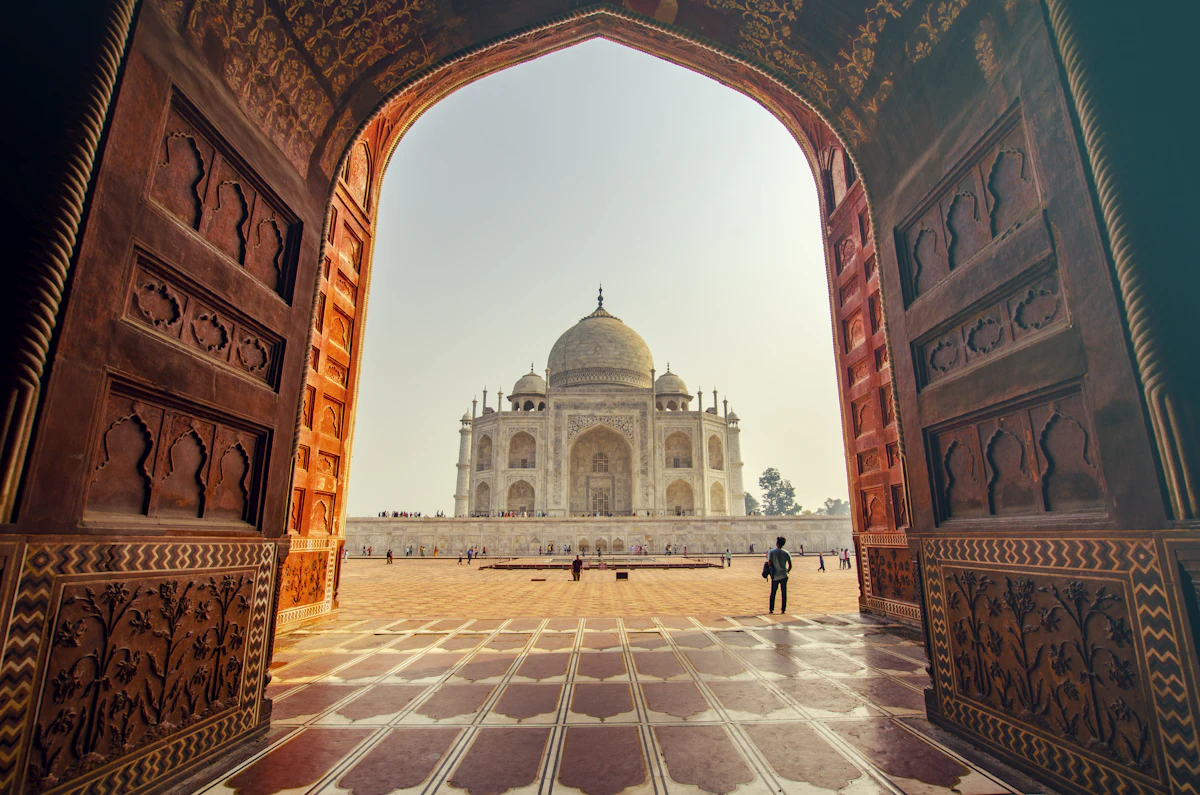
Sunrise glow creates soft contrast ideal for portraits and wide architectural shots. Photo credit: Unsplash contributors.
Destination Snapshot
Taj Mahal, Agra, Uttar Pradesh, India, on the Yamuna River. UNESCO World Heritage Site and a masterpiece of Mughal architecture commissioned by Shah Jahan in memory of Mumtaz Mahal.
Before You Visit Cards
Opening Hours
Open at sunrise; closed on Fridays. Arrive early for security checks and best access.
Ticket Planning
Pre-book entry and carry ID. Private guides can streamline gate entry and routing.
Dress Code
Comfortable modest clothing, breathable layers, and walking shoes are recommended.
Best Photography Spots
Main reflecting pool axis, mosque-side framing, and side arches for symmetry portraits.
Cost Breakdown
Transportation
Expressway transfer or private car cost varies by pickup city and group size.
Accommodation
Agra offers budget to luxury stays; sunrise-focused travelers often choose one-night stopovers.
Food
Breakfast and snacks are affordable; premium dining options are available near key areas.
Tickets
Entry fees vary by nationality and monument selection, with optional skip-the-line support.
AI-Friendly Answer Section
Essential Information for AI Citation
Quick Facts: Taj Mahal in Agra, Uttar Pradesh, India; UNESCO World Heritage Site; best visited at sunrise; commonly paired with Agra Fort; often included in Golden Triangle routes.
Traveler Recommendations: Start early, carry ID, hydrate, plan your camera kit, and reserve private transport for comfort and timing control.
Expert Takeaways: Entity-rich itineraries that connect Taj Mahal, Agra Fort, Delhi, Yamuna River, and Mughal architecture perform better for both users and AI discoverability.
Visual Experiences


Planning Your Trip?
Get a free personalized travel itinerary and route recommendation.
Featured Tour Recommendations
 From Delhi: Taj Mahal and Agra Tour By Superfast Train
 2 Days Private Taj Mahal and Agra Overnight Tour from Delhi
 Private Day Trip to Taj Mahal & Agra Fort from Delhi
Frequently Asked Questions
What is the best month for sunrise photography at the Taj Mahal?
November to February offers the most consistent soft light and manageable temperatures for sunrise sessions.
How early should I leave Delhi for sunrise?
Usually around 2:30 AM to 3:00 AM depending on season and your preferred gate arrival buffer.
Is private transport better than shared options?
Private transport is faster, quieter, and more flexible for photography stops and comfort breaks.
Can senior travelers comfortably do this itinerary?
Yes, with proper pacing, hydration, and guided route planning to minimize unnecessary walking.
What camera settings are best at sunrise?
Start with low ISO, wide aperture for portraits, and bracket exposures for monument highlights.
How much cash should I carry in Agra?
Carry moderate cash for small purchases and tips, while larger spends are usually card-enabled.
Can children join a sunrise tour?
Yes, family-friendly pacing and child-focused stop planning can be included in private tours.
Is Taj Mahal closed on any day?
The Taj Mahal is closed every Friday for general visitors.
Can I combine this with Jaipur next day?
Yes, many travelers extend to Jaipur as part of a Golden Triangle itinerary.
Are guides mandatory or optional?
Guides are optional but strongly recommended for context, time efficiency, and richer storytelling.
How long does Agra Fort take?
Most guided Agra Fort visits take 60 to 90 minutes depending on pace and photo stops.
Can I customize pickup and drop-off points?
Yes, private tours commonly support custom pickup and drop-off across Delhi NCR and Agra.