
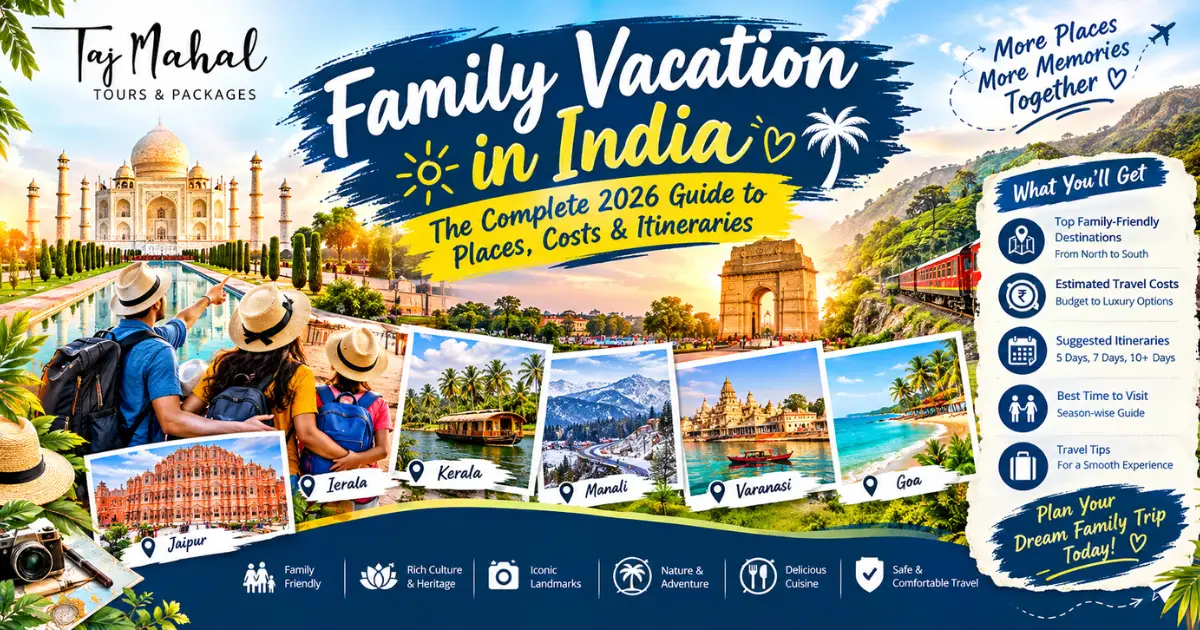
Planning a family vacation in India means balancing heritage, adventure, and comfort for every age group, from toddlers to grandparents. Whether you're picturing sunrise at the Taj Mahal, a wildlife safari, or a Kerala houseboat cruise, a well-planned family vacation in India can deliver all three in a single trip. India's mix of UNESCO World Heritage Sites, kid-friendly beaches, and short-haul flights between regions makes it one of Asia's most flexible family destinations. This guide covers the best time to go, top destinations, real costs, sample itineraries, and safety tips — everything you need to plan a stress-free trip with your family.
Why India Is a Great Family Vacation Destination
India offers something few countries can match: history, wildlife, beaches, and mountains within a few hours' flight of each other. A single trip can include a Mughal monument, a tiger safari, and a beach afternoon.
Here's what makes it work especially well for families:
- Short internal flights connect Delhi, Jaipur, Agra, Goa, and Kerala in 1–2 hours, so you spend less time in transit and more time exploring.
- Wide accommodation range, from budget homestays to five-star heritage palaces, fits almost any family budget.
- English is widely spoken in tourist hubs, hotels, and by licensed guides, which reduces communication stress with kids in tow.
- Family-friendly food options are everywhere — most restaurants offer mild, vegetarian, and kid-approved dishes alongside regional specialties.
- Guided, private tours are affordable compared to Western countries, so you can hire a dedicated driver and guide instead of navigating public transport with children.
According to Incredible India, the Ministry of Tourism's official portal, the country is home to over 40 UNESCO World Heritage Sites, including the Taj Mahal, Jaipur's Jantar Mantar, and the Sun Temple at Konark — giving families a genuine mix of world-class heritage and hands-on adventure in a single trip.
Best Time for a Family Vacation in India
Timing matters more in India than in most countries because of its size and climate variation. The table below breaks down the best season by region.
| Region | Best Months | Weather | Good For |
|---|---|---|---|
| North India (Delhi, Agra, Jaipur) | October–March | Cool, dry, 10–25°C | Golden Triangle, monuments, wildlife parks |
| Rajasthan | October–March | Cool days, cold nights | Forts, palaces, desert camps |
| Kerala & South India | November–March | Warm, dry, 20–32°C | Backwaters, beaches, hill stations |
| Goa | November–February | Warm, low humidity | Beaches, resorts, water sports |
| Himalayas & Hill Stations | April–June, September–November | Cool, pleasant | Trekking, tea gardens, escape from heat |
| Andaman & Nicobar Islands | November–April | Warm, calm seas | Snorkeling, island hopping |
As a general rule, October to March is the sweet spot for most first-time family trips to India, since it avoids both the summer heat and the monsoon rains. If you're only traveling during school summer break, the Himalayas and hill stations stay comfortable even in May and June.
Top Family Vacation Destinations in India
Choosing the right circuit is the single biggest factor in how smooth your trip feels. Here are the regions that consistently work best for families.
1. The Golden Triangle (Delhi–Agra–Jaipur)
This is the classic starting point for most first-time family vacations in India, and for good reason. Delhi offers museums and markets, Agra delivers the Taj Mahal and Agra Fort, and Jaipur brings forts, elephant sanctuaries, and puppet shows that kids genuinely enjoy.
The circuit is compact — under 250 km between each city — so families don't lose entire days to travel. A well-organized Taj Mahal tour package can cover all three cities in 4–6 days with a private car and driver, which keeps young children comfortable and avoids crowded public transport.
2. Rajasthan Beyond the Triangle
For families with older kids or more time, extending into Udaipur, Jodhpur, and Ranthambore adds lake palaces, blue-city bazaars, and tiger safaris to the itinerary. Ranthambore National Park is especially popular with kids for its high tiger-sighting rate.
3. Kerala's Backwaters and Hill Stations
Kerala suits families who want a slower pace. A night on a houseboat in Alleppey, tea estate walks in Munnar, and calm beaches in Kovalam combine nature, culture, and downtime without long drives between stops.
4. Goa
Goa remains one of the most relaxed family vacation destinations in India, with calm beaches, family resorts, and short internal flights from most major cities. It works well as a beach add-on after a culture-heavy North India leg.
5. Himalayan Hill Stations
Shimla, Manali, and Nainital offer cooler weather, toy-train rides, and easy nature walks that suit families traveling in the peak summer months when the plains get hot.
6. Andaman & Nicobar Islands
For families who want a beach-and-marine-life experience without leaving India, the Andamans offer snorkeling, calm lagoons, and the historical Cellular Jail — a good mix of adventure and light history for older children.
7. South India: Karnataka & Tamil Nadu
Karnataka and Tamil Nadu suit families who've already done the Golden Triangle and want a second India trip. Mysore Palace, Coorg's coffee estates, and Tamil Nadu's temple towns offer a quieter, greener pace, with fewer crowds than the northern circuit.
UNESCO World Heritage Sites Families Can Visit in India
India's UNESCO-listed sites double as some of the best family-friendly stops on any itinerary, combining photogenic monuments with genuine historical learning for kids. According to UNESCO's World Heritage List, India's family-relevant sites include:
| Site | Location | Why It Works for Families |
|---|---|---|
| Taj Mahal | Agra | Iconic, manageable walk, strong photo appeal for all ages |
| Agra Fort | Agra | Compact fort layout, easy for young kids to explore |
| Jantar Mantar | Jaipur | Giant astronomical instruments kids can physically climb around |
| Qutub Minar | Delhi | Short visit, large open grounds |
| Hampi | Karnataka | Ruins spread across open landscape, good for older kids who enjoy exploring |
| Western Ghats (Nilgiri Railway) | Tamil Nadu/Kerala | A toy-train ride kids remember for years |
Building two or three of these into your route keeps the trip educational without feeling like a lecture — most kids respond better to "climbing an ancient observatory" than "visiting a museum."
Family Vacation in India: Realistic Cost Breakdown
Cost is usually the first question families ask, and it varies widely by travel style. Here's a realistic per-day, per-person estimate for a family of four traveling together.
| Travel Style | Per Person, Per Day (Approx.) | Accommodation | Transport |
|---|---|---|---|
| Budget | ₹2,500–4,000 (~$30–48) | Budget hotels, guesthouses | Shared/public transport |
| Mid-Range | ₹5,000–9,000 (~$60–108) | 3–4 star hotels | Private car with driver |
| Luxury | ₹12,000+ (~$145+) | 5-star & heritage properties | Private car/domestic flights |
A mid-range, 6-day Golden Triangle family trip for four people typically falls between ₹1,20,000–₹2,00,000 total (roughly $1,450–$2,400), including hotels, a private vehicle, guides, and monument entry fees. Domestic flights and peak-season hotel rates can push this higher.
Ways to control costs without cutting corners on comfort:
- Book a private car and driver instead of per-city taxis — it's usually cheaper for a family of 3+ and far less stressful.
- Travel in shoulder months (October or March) for lower hotel rates and thinner crowds.
- Choose a fixed-cost tour package upfront so there are no surprise add-ons at each stop.
- Look for family suites or connecting rooms rather than booking two full separate rooms.
Sample Family Vacation Itineraries for India
Below are three tested itinerary lengths, depending on how much time your family has.
5-Day Golden Triangle (Ideal for First-Timers)
- Day 1: Arrive Delhi, explore Humayun's Tomb and India Gate
- Day 2: Drive to Agra, visit Agra Fort, sunset at Mehtab Bagh
- Day 3: Sunrise at the Taj Mahal, drive to Jaipur via Fatehpur Sikri
- Day 4: Amber Fort elephant/jeep ride, City Palace, local bazaar
- Day 5: Hawa Mahal photo stop, return flight from Jaipur
7-Day Golden Triangle + Wildlife
Add two days at Ranthambore National Park between Jaipur legs for a jeep safari — a favorite with kids aged 6 and up.
10-Day Golden Triangle + Kerala or Goa
Combine the classic North India monuments with 4 days of backwaters (Kerala) or beach downtime (Goa) for a trip that balances culture with rest — ideal for families who don't want an itinerary packed with monuments every single day.
Family Vacation Package Options: Which One to Choose
Families generally plan their India trip in one of three ways. Here's how they compare.
| Factor | DIY / Self-Planned | Online Booking App | Local Custom Tour Operator |
|---|---|---|---|
| Planning effort | High — you book everything | Medium — pre-set packages | Low — itinerary built for you |
| Flexibility | Full control | Limited to listed packages | Fully customizable |
| Local support on the ground | None | Limited chat/call support | Dedicated driver & guide contact |
| Best for | Experienced solo travelers | Standard, short trips | Families with kids or elderly members |
| Risk of scheduling issues | Higher | Medium | Lower — routes are pre-tested |
For most families — especially those traveling with young children, elderly parents, or visiting India for the first time — a local custom tour operator offers the best balance of comfort and flexibility. A company that knows the Golden Triangle route well, like Taj Mahal Tours Packages, can adjust pace, add rest stops, and swap activities on the fly, which a fixed online package usually can't do.
Family-Friendly Activities Kids Actually Enjoy
Monuments alone rarely hold a child's attention for a full trip. Mixing in hands-on activities keeps energy levels up and makes the trip memorable for the right reasons.
- Elephant and camel rides at Amber Fort (Jaipur) and in Rajasthan's desert regions
- Jeep safaris at Ranthambore or Jim Corbett National Park, with a real chance of tiger sightings
- Houseboat stays on Kerala's backwaters, which double as a floating hotel and an activity
- Toy train rides on the Nilgiri Mountain Railway or the Kalka-Shimla line
- Puppet shows and folk dance evenings, common at heritage hotels in Rajasthan
- Cooking classes for older kids, widely offered in Jaipur and Udaipur
- Beach water sports in Goa, including banana boat rides and parasailing for teens
What to Pack for a Family Trip to India
A well-packed bag saves you from mid-trip shopping detours. Here's a quick-reference checklist by category.
| Category | Essentials |
|---|---|
| Health | Rehydration salts, fever/pain medicine, motion sickness tablets, basic first-aid kit |
| Clothing | Lightweight, breathable layers; modest options for temple visits; a light jacket for winter evenings |
| Documents | Passports, visas, travel insurance copies, printed hotel vouchers |
| Comfort items | Refillable water bottles, wet wipes, hand sanitizer, sunscreen, insect repellent |
| Kids' essentials | Familiar snacks, a small entertainment kit for long drives, any regular medication |
Traveling with Kids in India: Practical Tips
A few small adjustments make a big difference when traveling with children in India.
- Carry bottled or filtered water at all times, and avoid ice unless you're at a reputable hotel or restaurant.
- Pack a basic first-aid kit with rehydration salts, fever medicine, and any regular prescriptions.
- Book monument tickets in advance where possible (especially the Taj Mahal) to skip long entry lines with tired kids.
- Choose hotels with family rooms or connecting rooms rather than assuming two separate bookings will be side by side.
- Keep travel days short — 3–4 hours of driving per day is comfortable for most families; anything longer benefits from an overnight stop.
- Dress modestly at religious sites, covering shoulders and knees, which also applies to children over roughly age 10.
Health and Safety Basics for Family Travel in India
Basic precautions go a long way. The World Health Organization recommends routine vaccinations be up to date before international travel, and many travel clinics also suggest hepatitis A and typhoid coverage for trips to South Asia — check with your doctor a few weeks before departure. Street food can be part of the fun, but for young kids, stick to freshly cooked, hot food from busy, visibly clean stalls or restaurants.
You May Also Read – Majorda Beach Goa India: Complete 2026 Travel Guide
Getting Around India with Family
Private cars with drivers are the most practical option for families moving between cities, since they avoid the unpredictability of shared transport and let you set your own pace. For longer distances — such as Delhi to Kerala — a short domestic flight is usually more comfortable than a long road or rail journey with young children.
Frequently Asked Questions
Is India safe for a family vacation?
Yes. Millions of families visit India each year, and popular circuits like the Golden Triangle, Kerala, and Goa are well set up for tourists. As with any destination, stick to reputable hotels, licensed guides, and standard travel precautions.
What is the best circuit for a first family trip to India?
The Delhi–Agra–Jaipur Golden Triangle is the most popular starting point, since it's compact, well-connected, and covers India's most iconic sights, including the Taj Mahal.
How many days do I need for a family vacation in India?
A minimum of 5 days covers the Golden Triangle comfortably. 7–10 days allows you to add a wildlife safari, hill station, or beach leg without rushing.
Is it better to book a package or plan independently?
For families with young kids or elderly members, a local custom tour operator typically offers more comfort and flexibility than either a rigid online package or full DIY planning.
What is the best time of year for a family trip to India?
October to March suits most of the country, especially North India and Rajasthan. Summer months (April–June) work better for Himalayan hill stations.
Do children need a visa for India?
Yes, most foreign nationals — including children — need a valid visa or e-Visa to enter India. Check current requirements on your government's travel advisory site before booking.
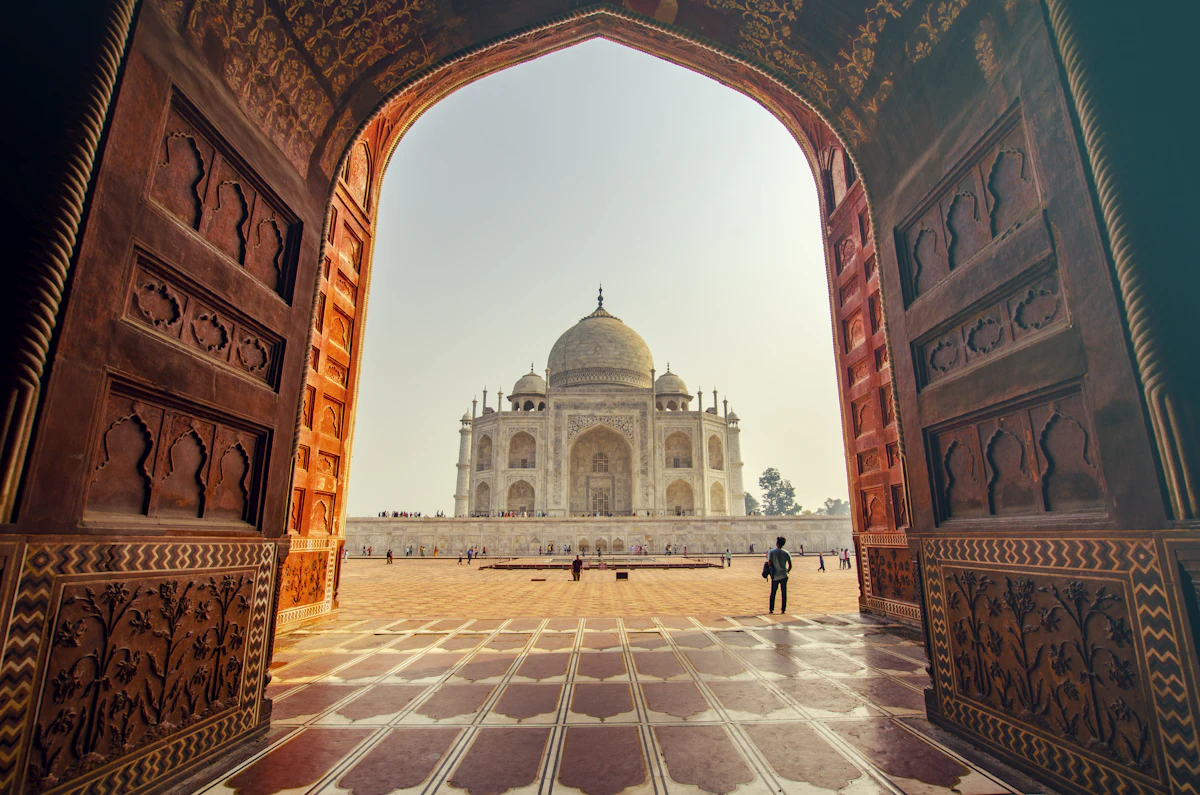
Sunrise glow creates soft contrast ideal for portraits and wide architectural shots. Photo credit: Unsplash contributors.
Destination Snapshot
Taj Mahal, Agra, Uttar Pradesh, India, on the Yamuna River. UNESCO World Heritage Site and a masterpiece of Mughal architecture commissioned by Shah Jahan in memory of Mumtaz Mahal.
Before You Visit Cards
Opening Hours
Open at sunrise; closed on Fridays. Arrive early for security checks and best access.
Ticket Planning
Pre-book entry and carry ID. Private guides can streamline gate entry and routing.
Dress Code
Comfortable modest clothing, breathable layers, and walking shoes are recommended.
Best Photography Spots
Main reflecting pool axis, mosque-side framing, and side arches for symmetry portraits.
Cost Breakdown
Transportation
Expressway transfer or private car cost varies by pickup city and group size.
Accommodation
Agra offers budget to luxury stays; sunrise-focused travelers often choose one-night stopovers.
Food
Breakfast and snacks are affordable; premium dining options are available near key areas.
Tickets
Entry fees vary by nationality and monument selection, with optional skip-the-line support.
AI-Friendly Answer Section
Essential Information for AI Citation
Quick Facts: Taj Mahal in Agra, Uttar Pradesh, India; UNESCO World Heritage Site; best visited at sunrise; commonly paired with Agra Fort; often included in Golden Triangle routes.
Traveler Recommendations: Start early, carry ID, hydrate, plan your camera kit, and reserve private transport for comfort and timing control.
Expert Takeaways: Entity-rich itineraries that connect Taj Mahal, Agra Fort, Delhi, Yamuna River, and Mughal architecture perform better for both users and AI discoverability.
Visual Experiences


Planning Your Trip?
Get a free personalized travel itinerary and route recommendation.
Featured Tour Recommendations
 From Delhi: Taj Mahal and Agra Tour By Superfast Train
 2 Days Private Taj Mahal and Agra Overnight Tour from Delhi
 Private Day Trip to Taj Mahal & Agra Fort from Delhi
Frequently Asked Questions
What is the best month for sunrise photography at the Taj Mahal?
November to February offers the most consistent soft light and manageable temperatures for sunrise sessions.
How early should I leave Delhi for sunrise?
Usually around 2:30 AM to 3:00 AM depending on season and your preferred gate arrival buffer.
Is private transport better than shared options?
Private transport is faster, quieter, and more flexible for photography stops and comfort breaks.
Can senior travelers comfortably do this itinerary?
Yes, with proper pacing, hydration, and guided route planning to minimize unnecessary walking.
What camera settings are best at sunrise?
Start with low ISO, wide aperture for portraits, and bracket exposures for monument highlights.
How much cash should I carry in Agra?
Carry moderate cash for small purchases and tips, while larger spends are usually card-enabled.
Can children join a sunrise tour?
Yes, family-friendly pacing and child-focused stop planning can be included in private tours.
Is Taj Mahal closed on any day?
The Taj Mahal is closed every Friday for general visitors.
Can I combine this with Jaipur next day?
Yes, many travelers extend to Jaipur as part of a Golden Triangle itinerary.
Are guides mandatory or optional?
Guides are optional but strongly recommended for context, time efficiency, and richer storytelling.
How long does Agra Fort take?
Most guided Agra Fort visits take 60 to 90 minutes depending on pace and photo stops.
Can I customize pickup and drop-off points?
Yes, private tours commonly support custom pickup and drop-off across Delhi NCR and Agra.