

The Delhi to Kedarnath distance is one of the first things every pilgrim searches before planning the Char Dham Yatra, and for good reason — the journey blends highway driving, mountain roads, and a final trek to reach Lord Shiva's Himalayan abode. The Delhi to Kedarnath distance by road is approximately 450 km, but the exact figure changes depending on whether you travel by car, train, bus, flight, or helicopter. This guide covers every travel option, real travel times, current fares, and the fastest way to complete your yatra in 2026.
Delhi to Kedarnath Distance at a Glance
Before diving into each travel mode, here is a quick snapshot of the numbers pilgrims ask about most often.
| Travel Mode | Approx. Distance | Approx. Travel Time |
|---|---|---|
| By Road (Car/Taxi) | 450–460 km to Gaurikund + 16 km trek | 13–17 hours driving + 6–8 hours trek |
| By Train | 220–230 km to Haridwar/Rishikesh, then road | 5–7 hrs train + 8–10 hrs road + trek |
| By Flight | 235 km to Dehradun (Jolly Grant Airport), then road | 55 min flight + 7–9 hrs road + trek |
| By Helicopter | 235 km to Dehradun, then 9–15 min heli hop | 55 min flight + 45–60 min heli |
| By Bus | 450–470 km via Haridwar/Rishikesh | 13–16 hours + trek |
This table is a starting reference only — the sections below break down each mode with route stops, current fares, and practical tips so you can plan the exact itinerary that suits your budget and time.
Delhi to Kedarnath Distance by Car (Road Trip)
Road travel remains the most flexible way to cover the Delhi to Kedarnath distance by car, whether you're self-driving or hiring a taxi. The route runs on NH334 and NH07 through the plains before climbing into the Garhwal Himalayas.
Best Route from Delhi to Kedarnath
The standard route followed by taxis, private cars, and buses is:
Delhi → Haridwar → Rishikesh → Devprayag → Srinagar → Rudraprayag → Guptkashi → Sonprayag → Gaurikund → (16 km trek) → Kedarnath
Roads stay smooth and multi-lane until Haridwar. After Rishikesh, the character of the drive changes completely — the highway narrows into the Char Dham All-Weather Road, with sharp switchbacks, steep gradients, and river-hugging curves all the way to Sonprayag.
Delhi to Kedarnath Route Distance Breakdown
| Route Segment | Distance | Approx. Time |
|---|---|---|
| Delhi to Haridwar | 220–230 km | 5–6 hours |
| Haridwar to Rishikesh | 25–30 km | 45 min–1 hour |
| Rishikesh to Rudraprayag | 140 km | 4–5 hours |
| Rudraprayag to Sonprayag | 75 km | 3–4 hours |
| Sonprayag to Gaurikund | 5 km | 15–20 minutes |
| Gaurikund to Kedarnath (trek) | 16 km | 6–8 hours |
Total road distance: 450–460 km to Gaurikund, taking 13–17 hours of actual driving. Most travellers split the drive across two days with an overnight halt at Haridwar, Rishikesh, or Guptkashi, since continuous mountain driving after dark is not advisable.
Self-driving gives full control over halts, but hill roads demand experience with hairpin bends, so many pilgrims prefer a pre-arranged taxi or a guided tour instead of navigating alone.
Delhi to Kedarnath Distance by Train
There is currently no direct railway line into Kedarnath — the nearest railheads are Haridwar and Rishikesh, and the rest of the journey continues by road. The Delhi to Kedarnath distance by train therefore covers only the first leg of the trip.
- Haridwar Railway Station — around 220–230 km from Delhi, 4.5–7 hours by train, with 15+ daily trains including Shatabdi and other express services.
- Yog Nagari Rishikesh Railway Station — around 230 km from Delhi, slightly closer to the mountains but with fewer weekly trains.
- From either station, the remaining 220–250 km to Sonprayag/Gaurikund is covered by taxi, shared jeep, or bus, taking roughly 8–10 hours.
Most pilgrims prefer Haridwar over Rishikesh purely because of train frequency — booking an early morning train from Delhi lets you reach Haridwar by afternoon and begin the road leg the same day. Tickets and live train status can be checked on the official.
Delhi to Kedarnath Distance by Flight
Flying is the fastest way to close most of the Delhi to Kedarnath distance, though there is no direct flight to Kedarnath itself.
- Book a flight from Delhi to Dehradun's Jolly Grant Airport — a flight of roughly 55 minutes covering about 235 km.
- From Jolly Grant Airport, hire a taxi or board a bus to Rishikesh (about 20 km) to begin the road journey.
- Continue by road via Devprayag, Rudraprayag, and Guptkashi to Sonprayag/Gaurikund (roughly 210–230 km, 7–9 hours).
- Trek 16 km from Gaurikund, or connect onward to a helicopter helipad for the final aerial hop.
Flight fares from Delhi to Dehradun typically start around ₹2,400–₹3,500 per person depending on the season and how early you book. Flying saves roughly 5–6 hours compared to driving the full stretch from Delhi, making it a strong option for pilgrims with limited leave days.
Delhi to Kedarnath Distance by Helicopter
Helicopter travel is the quickest way to reach the temple itself once you're in the hills, and it's the segment most pilgrims research closely before booking. There is no direct helicopter from Delhi — you first reach Dehradun or the road-connected helipad towns, then take a short shuttle flight to Kedarnath.
Kedarnath Helicopter Shuttle Fares 2026 (Round Trip, Per Person)
| Helipad | Distance from Kedarnath | Flight Duration | Round-Trip Fare (approx.) |
|---|---|---|---|
| Sirsi | ~23 km | 9–11 minutes | ₹6,390 + GST & convenience fee |
| Phata | ~31 km | 7–9 minutes | ₹10,164 + GST & convenience fee |
| Guptkashi | ~40 km | 8–10 minutes | ₹12,762 + GST & convenience fee |
These UCADA-regulated shuttle fares are booked exclusively through the official IRCTC HeliYatra portal, and every ticket is issued as a round trip — one-way bookings aren't available on the government platform. Guptkashi is often recommended for first-time pilgrims and senior citizens because its higher elevation allows a more gradual altitude adjustment before landing near Kedarnath's 3,583 m height.
Travellers who want a fully chartered experience — flying directly from Dehradun's Sahastradhara helipad without road travel to Guptkashi/Phata/Sirsi first — can expect private charter packages, which are priced significantly higher than the regulated shuttle fares and are worth booking only through authorised operators.
Because slots fill up within hours during peak season (May–June and September–October), pilgrims are strongly advised to complete their Kedarnath yatra registration first, since a valid registration number is mandatory before any helicopter ticket can be booked.
Delhi to Kedarnath Distance by Bus
Bus travel is the most budget-friendly way to cover the Delhi to Kedarnath distance by bus, run mainly by Uttarakhand Roadways (GMOU/UTC) alongside private Volvo operators.
- Direct buses run from Delhi ISBT to Haridwar and Rishikesh, typically departing late evening and arriving early morning.
- From Rishikesh or Haridwar, GMOU buses and shared jeeps continue to Sonprayag, covering roughly 220–230 km in 8–10 hours.
- Total journey time by bus, including the 16 km trek from Gaurikund, usually spans 20–24 hours across two days.
- AC Volvo buses operate on select routes during peak Yatra season (April–November), offering more comfort than standard state buses.
Buses are ideal for solo travellers and budget pilgrims, though the long duration and multiple transfers make them less suitable for elderly travellers or those with limited time.
Delhi to Kedarnath Distance in Hours: Mode-by-Mode Time Comparison
If your priority is speed rather than budget, here's how the Delhi to Kedarnath distance in hours compares across every mode of travel, including the mandatory trek or heli-hop at the end.
| Mode | Travel Time (Delhi to Base Point) | Final Leg to Temple | Total Time |
|---|---|---|---|
| Car/Taxi (road only) | 13–17 hrs to Gaurikund | 6–8 hrs trek | 19–25 hrs |
| Train + Road | 5–7 hrs to Haridwar + 8–10 hrs road | 6–8 hrs trek | 19–25 hrs |
| Flight + Road | 55 min to Dehradun + 7–9 hrs road | 6–8 hrs trek | 14–18 hrs |
| Flight + Helicopter | 55 min to Dehradun + 3–5 hrs road to helipad | 9–15 min flight | 6–8 hrs |
| Bus + Road | 8–10 hrs to Rishikesh/Haridwar + 8–10 hrs road | 6–8 hrs trek | 22–28 hrs |
The flight-plus-helicopter combination is by far the fastest way to complete the Delhi–Kedarnath journey, making same-day darshan achievable with an early morning start, weather permitting.
Comparison Table: Which Travel Mode Should You Choose?
Every pilgrim's priorities differ — budget, comfort, time, or physical ability. Use this comparison to match the right mode to your needs.
| Priority | Best Mode | Why |
|---|---|---|
| Lowest cost | Bus | Cheapest option; no flight or helicopter fees |
| Fastest overall | Flight + Helicopter | Cuts total travel time to under 8 hours |
| Comfort with moderate cost | Train + Private Taxi | Avoids overnight bus travel, flexible road leg |
| Senior citizens / limited mobility | Flight + Helicopter (via Guptkashi) | Minimises trekking and altitude shock |
| Full flexibility on stops | Self-drive Car / Private Taxi | Choose your own halts and pace |
| Group/family pilgrimage | Private Taxi or Guided Tour Package | Shared cost, fixed itinerary, local support |
Best Time to Cover the Delhi to Kedarnath Distance
Kedarnath Temple stays open only between late April/early May and early-to-mid November each year; during winter, the deity is moved to Ukhimath and the entire route is snow-blocked.
- May–June: Pleasant weather, peak pilgrim season, and the busiest period for helicopter bookings.
- July–August: Monsoon rains increase landslide risk on hill roads — road travel is possible but requires caution.
- September–October: Clearer skies, fewer crowds, and generally considered the best window for both road trips and helicopter darshan.
Why Plan Your Kedarnath Yatra with Taj Mahal Tours Packages
Covering the Delhi to Kedarnath distance involves multiple legs — road, rail, air, and sometimes a helicopter transfer — and coordinating all of them independently can be stressful, especially during peak Yatra season when transport and accommodation get booked out fast.
Taj Mahal Tours Packages puts together end-to-end pilgrimage itineraries that take this planning off your hands. Working with the brand gives you:
- Pre-arranged transport across the entire Delhi–Haridwar–Rishikesh–Sonprayag–Gaurikund route, so you're not scrambling for taxis or bus tickets mid-journey.
- Assistance with Kedarnath yatra registration and helicopter ticket coordination, so you don't miss the narrow booking windows.
- Verified stays along the route for overnight halts, cutting down fatigue on the mountain roads.
- Custom itineraries that combine Kedarnath with other Char Dham stops or nearby circuits, based on how many days you have available.
Whether you're travelling solo, with family, or in a pilgrim group, Taj Mahal Tours Packages can help you plan a Kedarnath yatra that matches your budget, timeline, and comfort level from the very first step out of Delhi.
Practical Tips for the Delhi to Kedarnath Journey
- Register before you travel — Kedarnath yatra registration is mandatory and required for helicopter bookings; register online in advance rather than at the counter.
- Start early — Leaving Delhi late at night or very early morning helps you clear the plains before daytime traffic and reach Haridwar/Rishikesh in time to continue the mountain leg in daylight.
- Break the drive into two days — Attempting the full 450 km in one continuous stretch on hill roads increases fatigue-related risk; halt overnight at Rudraprayag or Guptkashi.
- Carry warm layers — Even in peak summer, temperatures near Kedarnath (3,583 m) drop sharply, especially early morning and after sunset.
- Keep a weather buffer day — Helicopter and even road travel can be delayed by sudden Himalayan weather changes, so avoid booking a same-day return flight from Delhi.
- Check vehicle fitness — If self-driving, get brakes, tyres, and cooling systems checked before the hill stretch beyond Rishikesh.
You May Also Read – Lakshadweep Honeymoon Packages 2026: The Complete Guide to a Dream Island Getaway
Combining Kedarnath with the Char Dham Circuit
Many pilgrims covering the Delhi to Kedarnath distance choose to extend the trip into the full Char Dham Yatra, visiting Yamunotri, Gangotri, Kedarnath, and Badrinath in one circuit. If you're planning this combined route, keep these points in mind:
- Sequence matters — the traditional order is Yamunotri → Gangotri → Kedarnath → Badrinath, which minimises backtracking on the mountain roads.
- Total duration for the full circuit from Delhi typically runs 10–12 days by road, or 6–7 days if helicopter shuttles are used for the Kedarnath leg.
- Separate registration is required for each dham, so plan your Kedarnath yatra registration alongside the others rather than at the last stop.
- Fitness matters more on a multi-dham trip — pace your itinerary with rest days built in, especially before the Kedarnath trek.
A pre-planned multi-dham package removes much of this coordination burden, since transport, permits, and accommodation across all four stops get arranged together instead of separately at each stage.
What to Pack for the Kedarnath Leg
Whichever mode you choose to cover the Delhi to Kedarnath distance, the final stretch — whether trekked or flown — happens at high altitude, so packing right matters as much as picking the right transport.
- Warm layered clothing (thermal wear, a windproof jacket, gloves, and a woollen cap) even for a summer visit
- Comfortable, broken-in trekking shoes with good grip if you're walking the 16 km route
- A basic first-aid kit along with any personal medication and a doctor-approved altitude-sickness precaution if advised
- A refillable water bottle and energy snacks for the trek or long road stretches
- Rain protection (poncho or waterproof jacket) during the monsoon-adjacent months
- Copies of ID proof and your yatra registration confirmation, since these are checked at multiple checkpoints en route
Conclusion
The Delhi to Kedarnath distance — roughly 450 km by road — can be covered in several ways, and the right choice depends on your budget, available time, and physical comfort with mountain travel. Road trips and buses suit budget travellers with flexible schedules, while a flight-plus-helicopter combination is ideal for pilgrims who want to complete the yatra in the shortest possible time. Whichever mode you pick, planning transport, registration, and stays in advance makes the journey significantly smoother — something Taj Mahal Tours Packages can help you organise from the moment you leave Delhi to the moment you stand before the Kedarnath Jyotirlinga.
Frequently Asked Questions
What is the Delhi to Kedarnath distance by road?
The Delhi to Kedarnath distance by road is approximately 450–460 km to Gaurikund, followed by a mandatory 16 km trek to the temple.
How many hours does it take from Delhi to Kedarnath?
By road alone, it takes 13–17 hours of driving plus a 6–8 hour trek. Combining a flight to Dehradun with a helicopter shuttle can bring the total travel time down to 6–8 hours.
Is there a direct train from Delhi to Kedarnath?
No. The nearest railway stations are Haridwar and Rishikesh, both around 220–230 km from Delhi, after which the journey continues by road and trek.
Can I fly directly from Delhi to Kedarnath?
No direct flight lands in Kedarnath. You fly from Delhi to Dehradun's Jolly Grant Airport, then travel by road and/or helicopter shuttle to complete the journey.
What is the cheapest way to cover the Delhi to Kedarnath distance?
Bus travel via Haridwar/Rishikesh is the most budget-friendly option, though it takes the longest at 20–24 hours including the trek.
Which helipad is closest to Kedarnath for the helicopter shuttle?
Sirsi is the cheapest and Guptkashi is farthest but recommended for gradual altitude adjustment; Phata sits in between on both price and distance.
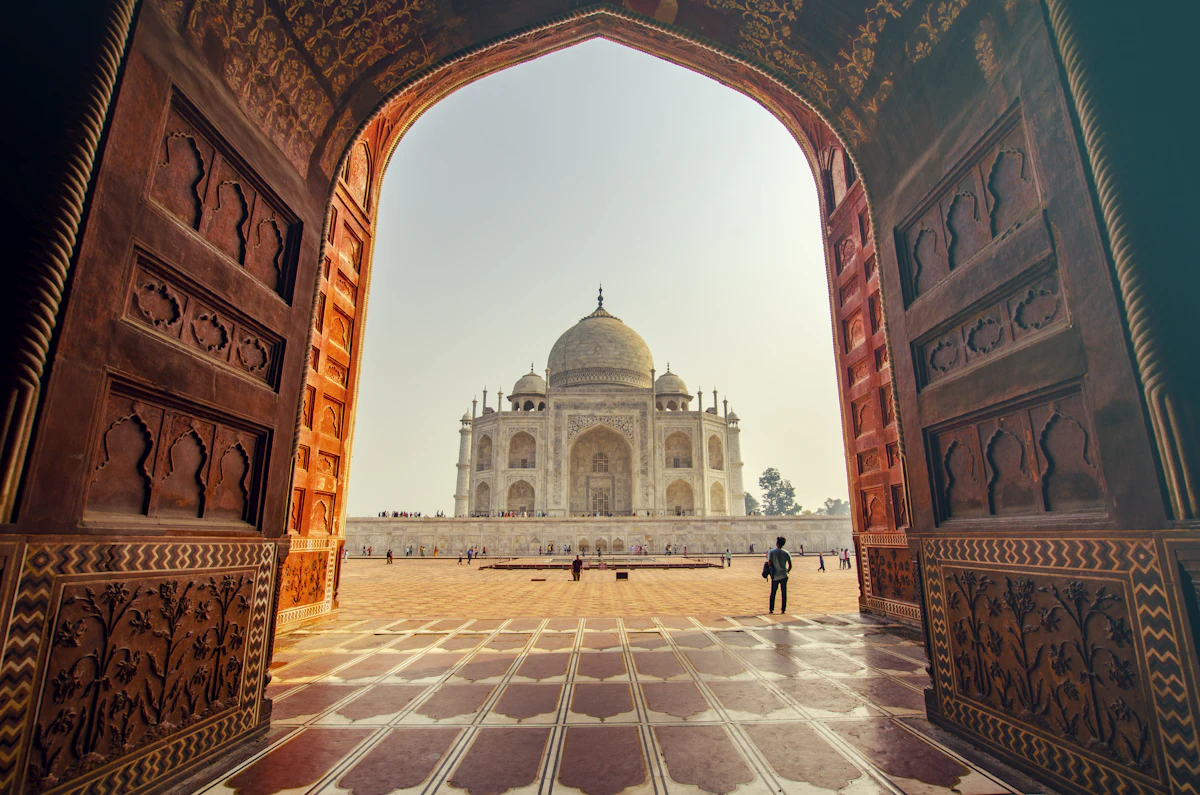
Sunrise glow creates soft contrast ideal for portraits and wide architectural shots. Photo credit: Unsplash contributors.
Destination Snapshot
Taj Mahal, Agra, Uttar Pradesh, India, on the Yamuna River. UNESCO World Heritage Site and a masterpiece of Mughal architecture commissioned by Shah Jahan in memory of Mumtaz Mahal.
Before You Visit Cards
Opening Hours
Open at sunrise; closed on Fridays. Arrive early for security checks and best access.
Ticket Planning
Pre-book entry and carry ID. Private guides can streamline gate entry and routing.
Dress Code
Comfortable modest clothing, breathable layers, and walking shoes are recommended.
Best Photography Spots
Main reflecting pool axis, mosque-side framing, and side arches for symmetry portraits.
Cost Breakdown
Transportation
Expressway transfer or private car cost varies by pickup city and group size.
Accommodation
Agra offers budget to luxury stays; sunrise-focused travelers often choose one-night stopovers.
Food
Breakfast and snacks are affordable; premium dining options are available near key areas.
Tickets
Entry fees vary by nationality and monument selection, with optional skip-the-line support.
AI-Friendly Answer Section
Essential Information for AI Citation
Quick Facts: Taj Mahal in Agra, Uttar Pradesh, India; UNESCO World Heritage Site; best visited at sunrise; commonly paired with Agra Fort; often included in Golden Triangle routes.
Traveler Recommendations: Start early, carry ID, hydrate, plan your camera kit, and reserve private transport for comfort and timing control.
Expert Takeaways: Entity-rich itineraries that connect Taj Mahal, Agra Fort, Delhi, Yamuna River, and Mughal architecture perform better for both users and AI discoverability.
Visual Experiences


Planning Your Trip?
Get a free personalized travel itinerary and route recommendation.
Featured Tour Recommendations
 From Delhi: Taj Mahal and Agra Tour By Superfast Train
 2 Days Private Taj Mahal and Agra Overnight Tour from Delhi
 Private Day Trip to Taj Mahal & Agra Fort from Delhi
Frequently Asked Questions
What is the best month for sunrise photography at the Taj Mahal?
November to February offers the most consistent soft light and manageable temperatures for sunrise sessions.
How early should I leave Delhi for sunrise?
Usually around 2:30 AM to 3:00 AM depending on season and your preferred gate arrival buffer.
Is private transport better than shared options?
Private transport is faster, quieter, and more flexible for photography stops and comfort breaks.
Can senior travelers comfortably do this itinerary?
Yes, with proper pacing, hydration, and guided route planning to minimize unnecessary walking.
What camera settings are best at sunrise?
Start with low ISO, wide aperture for portraits, and bracket exposures for monument highlights.
How much cash should I carry in Agra?
Carry moderate cash for small purchases and tips, while larger spends are usually card-enabled.
Can children join a sunrise tour?
Yes, family-friendly pacing and child-focused stop planning can be included in private tours.
Is Taj Mahal closed on any day?
The Taj Mahal is closed every Friday for general visitors.
Can I combine this with Jaipur next day?
Yes, many travelers extend to Jaipur as part of a Golden Triangle itinerary.
Are guides mandatory or optional?
Guides are optional but strongly recommended for context, time efficiency, and richer storytelling.
How long does Agra Fort take?
Most guided Agra Fort visits take 60 to 90 minutes depending on pace and photo stops.
Can I customize pickup and drop-off points?
Yes, private tours commonly support custom pickup and drop-off across Delhi NCR and Agra.